|
Cost Segregation for Commercial & Short-Term Rental Owners
|
Request a free estimate [email protected] |
Qualification
FREE Estimate Is there a first-year deduction sitting in your building? No cost, no obligation. Request Yours »Minimum ROIOur study identifies at least 20x its fee in first-year deductions on commercial property, or at least 30x on a short-term rental, or it is free. |
The Self-Rental Grouping Election Under Section 469, ExplainedQuick answer Treas. Reg. 1.469-4 lets a taxpayer group multiple activities into one "appropriate economic unit" for section 469 purposes, based on facts like common ownership, common control, and interdependence between the businesses. The regulation generally blocks grouping a rental activity with a trade or business, except when each owner of the trade or business holds the identical proportionate ownership interest in the rental, the fact pattern a self-rental to a wholly owned operating company usually presents. Grouped activities are tested for material participation as a single unit. See this applied to your building. A few questions, 30 seconds. You see which tests matter and the first-year deduction range a study would look for. No email to see the range. Run the 30-second check »Key takeaways
What an "Appropriate Economic Unit" MeansTreas. Reg. 1.469-4 allows a taxpayer to combine more than one trade or business or rental activity into a single activity for section 469 purposes, called an appropriate economic unit, when the facts and circumstances support treating them as one. The regulation lists the relevant factors:
No single factor controls. The regulation directs a taxpayer to weigh them together based on the specific activities involved. For a self-rental specifically, the interdependence factors tend to line up closely. The building typically has one tenant, the operating business next door. The two entities often share a bookkeeper or a single accounting file. The rental exists because the business needs a place to operate, not as an independent real estate investment made on its own terms. Those facts point toward, not away from, treating the rental and the business as one appropriate economic unit, once the ownership test described below is also met. 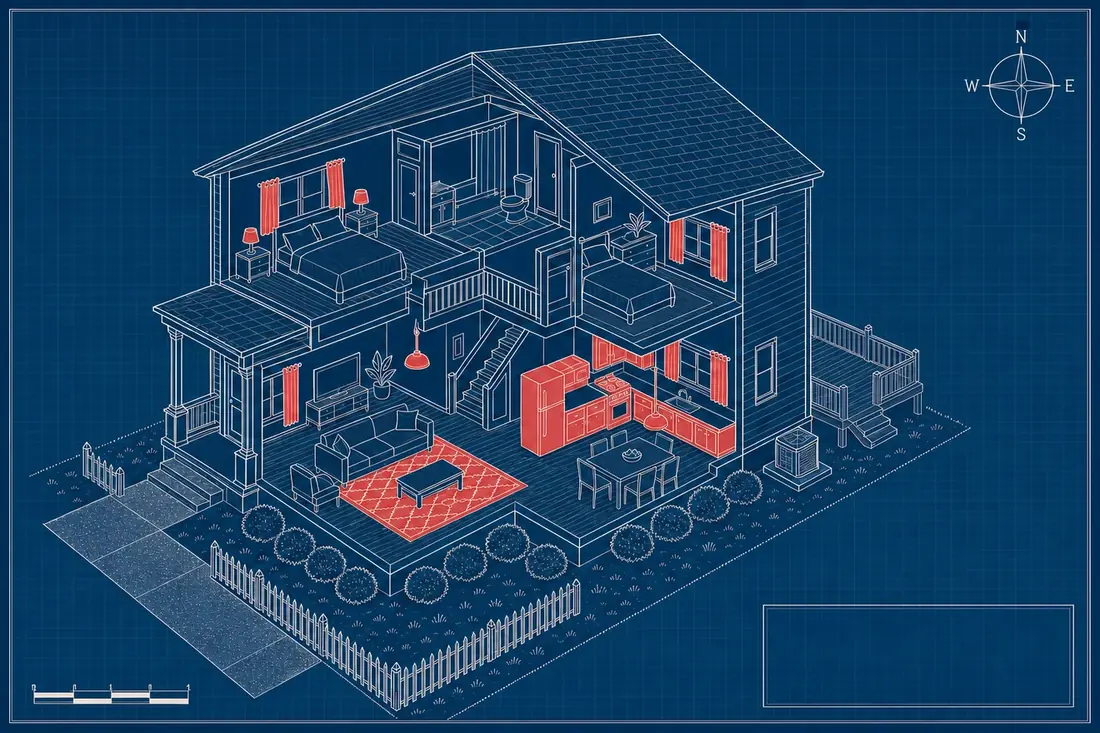
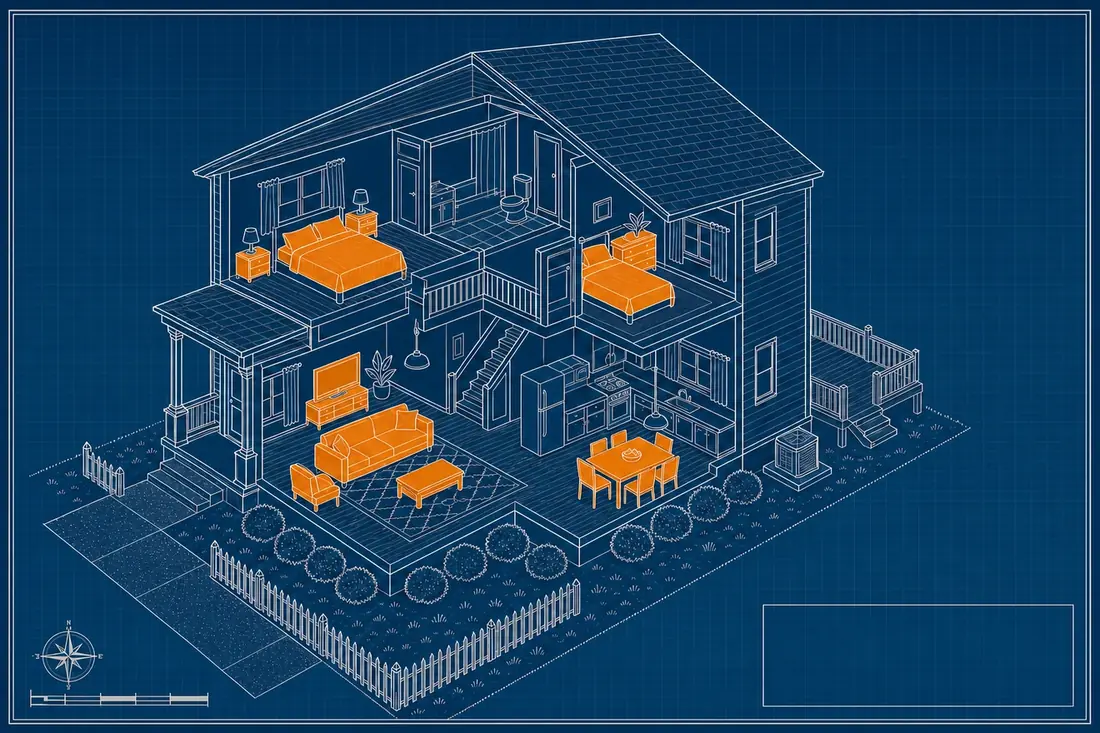
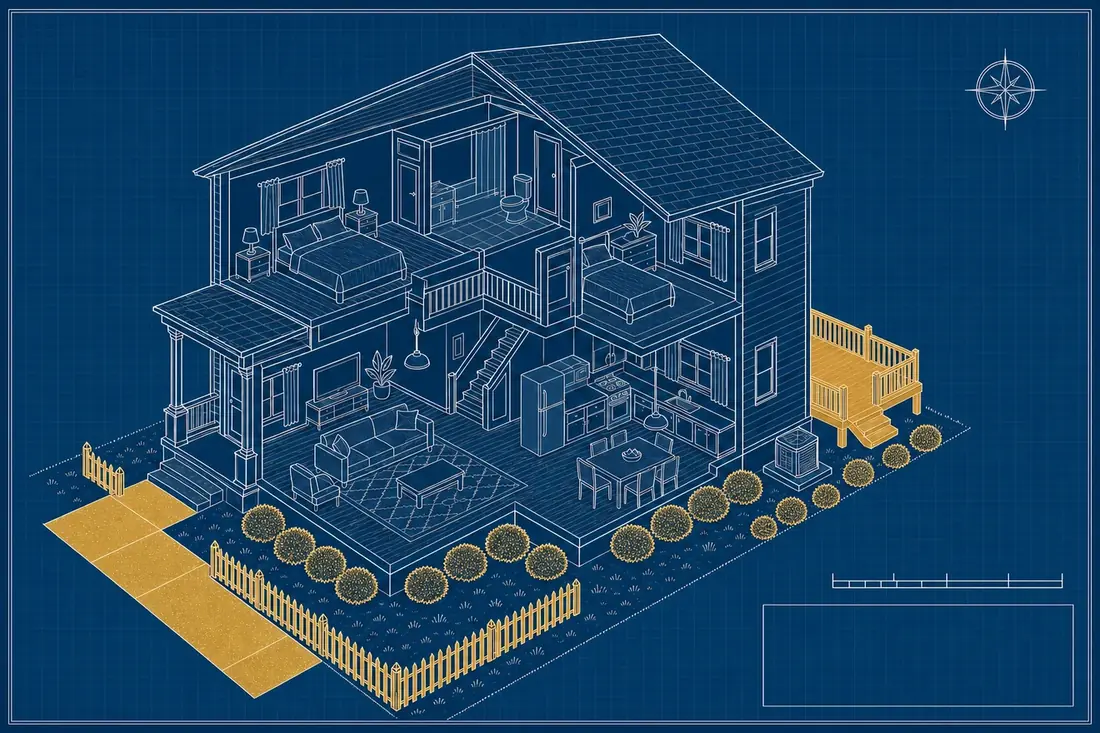
5-Year: carpet and flooring, cabinets, appliances, light fixtures, curtains 7-Year: furniture 15-Year: driveway, fencing, landscaping, deck 27.5/39-Year Shell: roof, load-bearing walls, foundation, central HVAC Get your free Preliminary Benefit Estimate Run the free estimate on the building itself; the grouping question is a separate conversation for your CPA to have using the ownership documents. Request Your Free Estimate »Why Rental-Plus-Business Grouping Is Restricted by DefaultSection 469 generally treats a rental activity as passive regardless of participation, while a trade or business activity is tested for material participation on its own terms. Because mixing those two categories together could let an owner import material participation from an active business into a rental that would otherwise always be passive, Treas. Reg. 1.469-4(d)(1) specifically limits when a rental activity can be grouped with a trade or business activity. The Exception That Fits a Self-RentalThe regulation allows the grouping in two situations: when the rental activity is insubstantial in relation to the trade or business, or the reverse, or when each owner of the trade or business activity holds the same proportionate ownership interest in the rental activity. In that second case, the portion of the rental activity that involves property rented to that trade or business can be grouped with it. A wholly owned operating company renting its building from an entity with identical ownership, the standard self-rental pattern, generally lands in that second category, since ownership percentages line up exactly between the two entities. Same owners, same percentages, one activity for section 469 purposes.
The Proportionate Ownership Test, With NumbersThe identical-ownership exception is precise about what counts as identical. Consider a building owned 60% and 40% by two partners through Building LLC, while the operating business, Practice LLC, is owned 55% and 45% by the same two people. Even though the same two individuals own both entities, the percentages themselves don't match, so the ownership-identity exception in Treas. Reg. 1.469-4(d)(1) does not apply to that structure. Now change one fact: both entities are owned 50/50 by the same two partners. The percentages are identical, and the portion of the rental activity involving property rented to the trade or business can be grouped with it. A small difference in ownership percentage, not just a different set of owners altogether, is enough to put a structure outside the exception, which is why the ownership documents get checked line by line before a grouping position is taken. The 60-Second Qualifier Four questions. Our engineering team's model shows the estimated first-year acceleration a study of your property would target, free, before you commit to anything. Take the Qualifier »What Grouping Actually DoesOnce activities are grouped into a single appropriate economic unit, section 469 tests material participation against the combined activity, not against each piece separately. An owner who materially participates in the operating business is, by extension, treated as materially participating in the combined rental-plus-business activity. The combined activity's net result, income or loss, is measured as one number rather than as two separate passive and nonpassive pieces. That's the mechanism that can pull a self-rental loss out of the passive category the standalone self-rental recharacterization rule would otherwise put it in. Without a grouping election in place, the two entities are tested separately: the operating business stands on its own nonpassive footing, and the self-rental is tested under the general recharacterization rule described on the self-rental trap page, where income moves to nonpassive but a loss stays passive. Grouping is the mechanism that removes that separate treatment. It changes which activity the material participation test is measured against in the first place. Why the Election Is Generally BindingOnce a taxpayer groups activities under Reg. 1.469-4, that grouping generally applies in all later tax years and cannot be freely undone. A taxpayer can regroup only if the original grouping is shown to have been clearly inappropriate, or if a material change in the facts and circumstances makes the existing grouping clearly inappropriate going forward. That binding structure is why the grouping decision gets made deliberately, with a CPA reviewing the ownership structure and the interdependency factors, rather than adjusted year to year based on which way the numbers happen to run. A change in ownership percentages between the two entities is a common trigger for revisiting an existing grouping, since the facts that supported treating them as one appropriate economic unit may no longer hold once the percentages diverge. That is a fact pattern worth flagging to a CPA when it happens, rather than assuming the original grouping still fits the entities as they exist today. The Filing Mechanics, at a Descriptive LevelA grouping is documented through how the combined activities are treated and reported on the return for the year the grouping begins. When activities are regrouped in a later year, or new activities are added to an existing group, the taxpayer generally attaches a disclosure statement identifying the activities being grouped and the basis for treating them as an appropriate economic unit. The specific disclosure requirements and formatting are a return-preparation question for the taxpayer's own CPA, not a step a cost segregation study performs. Activities already grouped in a prior year generally don't require a fresh disclosure statement each year after that. The disclosure requirement is triggered specifically by a new grouping, a regrouping, or the addition of a new activity to an existing group. Absent one of those events, the return simply continues reflecting the combined treatment established in the year the grouping began. Where This Meets a Cost Segregation StudyNone of the grouping analysis changes what a cost segregation study finds inside a self-rented building; the study still identifies the same 5-, 7-, and 15-year components under the same rules described on the self-rental trap page. What the grouping election changes is how the resulting deduction, especially a loss year created by accelerated depreciation, gets characterized once it reaches the owner's return. That characterization question sits with the owner's CPA, working from the ownership documents and the interdependency facts between the two entities. Scale matters here too. One of our benchmark runs on a free-standing restaurant identified $599,678 in first-year deductions on a $2,804,440 building basis for a $9,000 fee, a 66.6:1 ratio, the kind of acceleration that can turn a self-rented restaurant building from modest net income into a loss for the year. Whether that loss can offset the restaurant operating company's nonpassive income, or gets stranded as passive, is exactly the question the grouping election is built to answer, provided the ownership percentages line up as described above. Frequently asked questionsDoes a grouping election have to be filed with the IRS separately? There is generally no separate election form; grouping is evidenced by how the activities are treated and reported together on the return, with a disclosure statement required in the year a new grouping or regrouping is made. The specific reporting mechanics depend on the taxpayer's situation and are handled by the preparer. Can a self-rental be grouped with a business it doesn't have identical ownership with? That fact pattern falls outside the ownership-identity exception described in Reg. 1.469-4(d)(1), so grouping would have to rely on the insubstantial-relationship exception instead, which asks whether one activity is small relative to the other. Whether either exception applies to a specific ownership structure is a determination for a CPA reviewing the actual entities involved. What happens if the IRS disagrees with how activities were grouped? The regulation's facts-and-circumstances standard means a grouping can be challenged if the specific facts don't support treating the activities as an appropriate economic unit. That's a substantiation and documentation question, which is why the common-ownership and interdependency factors get documented at the time the grouping is made, not reconstructed later. Once grouped, can the rental and the business ever be separated again? Only if the original grouping is shown to have been clearly inappropriate, or a material change in facts and circumstances makes the existing grouping clearly inappropriate going forward. Absent one of those two conditions, the grouping generally carries forward unchanged into later years. Does grouping affect anything other than passive activity treatment? The grouping rules under Reg. 1.469-4 are specific to section 469 passive activity determinations. They don't change how a cost segregation study classifies the building's components or how depreciation is calculated; they change how the resulting income or loss is characterized once it reaches the return. Is a grouping election the same as real estate professional status? No. Real estate professional status is a separate test under section 469(c)(7) that looks at an owner's total hours in real property trades and works on the rental activity directly. Grouping under Reg. 1.469-4 combines the rental with a trade or business instead; a taxpayer can qualify for one, both, or neither depending on their specific hours and ownership facts. Keep readingGet your free Preliminary Benefit Estimate Send the address or the listing link. We model the number first; you decide with it in hand. Request Your Free Estimate »Educational information, not tax advice. This page describes how federal
depreciation rules and tests work in general. Whether any rule fits your facts is a determination for
you and your CPA. Our study gives your CPA the engineering and the numbers to make that call.
|