|
Cost Segregation for Commercial & Short-Term Rental Owners
|
Request a free estimate [email protected] |
STR Guides
Free Listing SEO Audit Paste your Airbnb or VRBO listing. Get a scored audit in 90 seconds. Audit My Listing »Minimum ROIOur study identifies at least 20x its fee in first-year deductions on commercial property, or at least 30x on a short-term rental, or it is free. |
What Happens to Depreciation When an STR Becomes a Long-Term Rental?Converting a short-term rental to a long-term rental, or the reverse, does not erase an earlier cost segregation study. The 5-, 7-, and 15-year components a study already identified keep their classification. What changes is the building shell's recovery-period test, 27.5 years versus 39, which runs on that tax year's actual average stay and dwelling-income share, and the passive-activity classification, since the short-term rental exception only applies in years the 7-day average is actually met. Key takeaways
Steven's Take Owners ask me if switching a rental from short-term to long-term wipes out an earlier study, and it does not. The components a study already found, the carpet, the cabinetry, the site utilities, keep their classification regardless of who is staying there next year. What actually moves is the shell's recovery period, 27.5 years versus 39, and whether the short-term exception still applies in a given tax year, since that exception only holds in years the average stay actually clears seven days. Converting back runs the identical test in reverse. The study does not get redone. The classification underneath it was never what changed. Steven Ellis, Founder Watch a log cabin rental get built and classified A hypothetical $600,000 three-bedroom log cabin goes up floor by floor, from the gravel drive and foundation to the game loft and the hot tub on the deck. Every component lands on its depreciation schedule as it is installed, and the year-one depreciation adds up on screen. Watch the 90-second walkthrough »Two Separate Questions, Not OneA property converting from a short-term rental to a long-term rental, or the reverse, actually raises two separate tax questions that run off the same underlying facts: which depreciation recovery period the building shell uses, and whether the owner's losses are passive or non-passive. Both questions run off the property's actual use pattern for the tax year, but they lead to different rules and different consequences. 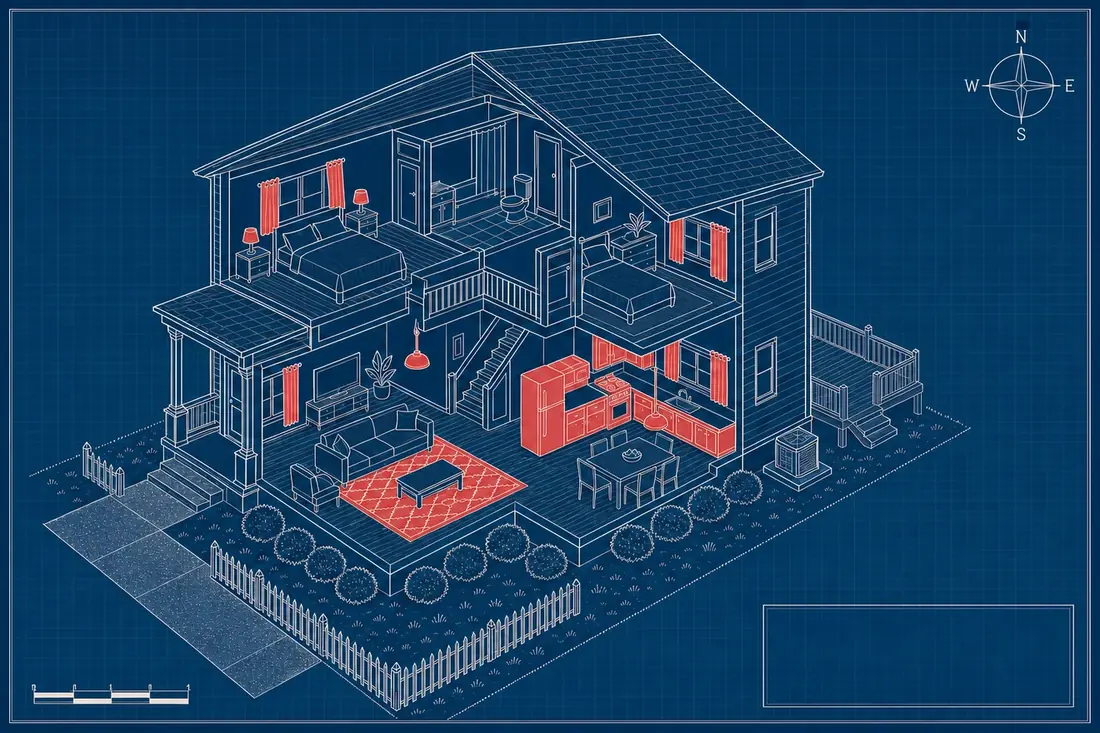
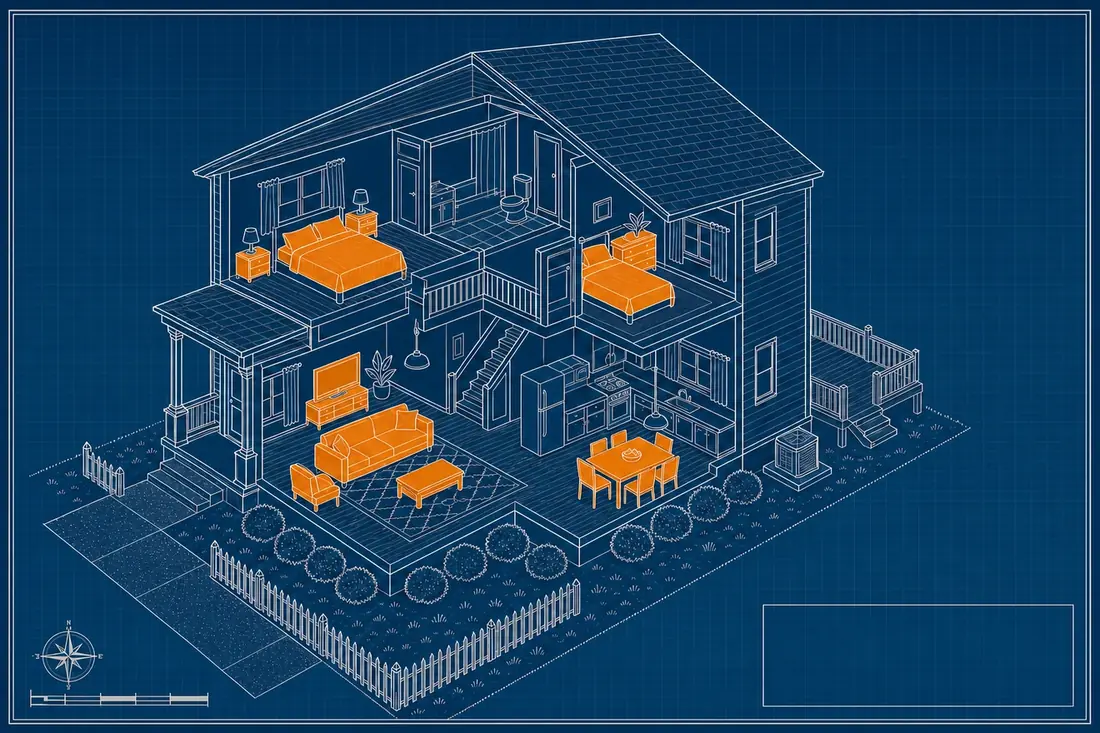
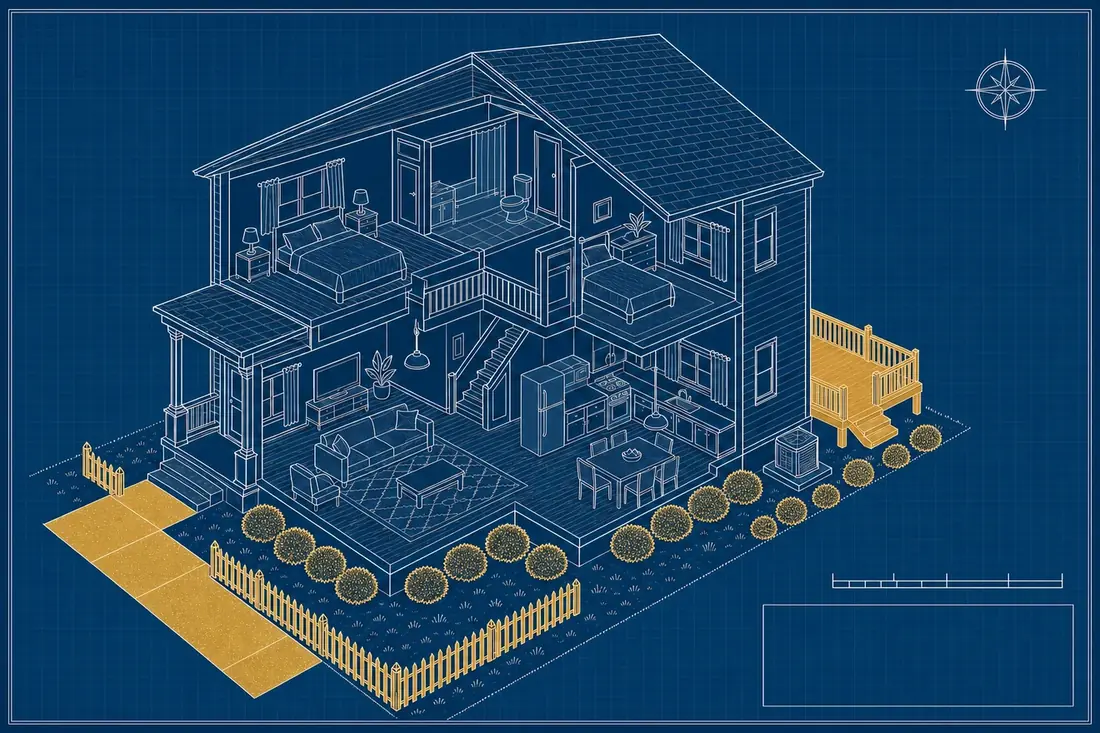
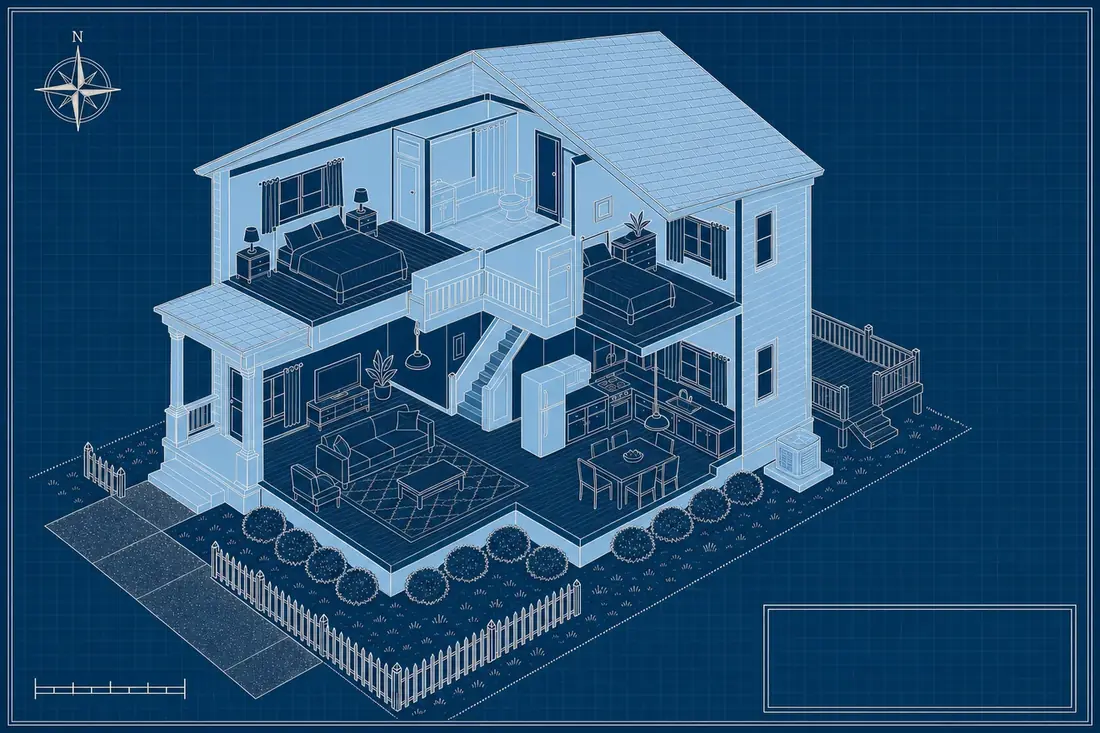
5-Year: carpet and flooring, cabinets, appliances, light fixtures, curtains 7-Year: furniture 15-Year: driveway, fencing, landscaping, deck 27.5/39-Year Shell: roof, load-bearing walls, foundation, central HVAC Get your free Preliminary Benefit Estimate The components don't disappear when the lease terms change. Only the shell's test resets, every year. Wondering what a study would find on this property today? Start with the free estimate. Request Your Free Estimate »The Recovery-Period Question Runs Again Each YearA building's shell depreciates as residential rental property over 27.5 years when 80% or more of its gross rental income comes from dwelling units for the year, or as nonresidential property over 39 years when the average guest stay reads as transient, hotel-like use. See is short-term rental depreciation 27.5 or 39 years for the full test. A property converting from nightly bookings to a single long-term tenant is not locked into whichever schedule it started on. The classification runs on the actual rental pattern for each tax year, which means a conversion partway through a property's history can genuinely change which schedule applies going forward. What Change in Use Means for a Depreciating BuildingThe tax code has specific rules for a depreciable asset that changes use partway through its life. In plain terms: when a property's use changes enough to move it from one recovery period to another, the owner continues depreciating the remaining, undepreciated basis over the new classification's schedule rather than starting over from the original cost. The components a cost segregation study already pulled into 5-, 7-, or 15-year buckets keep depreciating on those schedules; the change-in-use question only touches the structural shell's own recovery period. What Happens to an Earlier Study's ComponentsAn owner who commissioned a cost segregation study while the property operated as a short-term rental, then converts it to a long-term rental, does not lose that study's classifications. The carpet, cabinetry, decorative lighting, and land improvements already identified keep their 5-, 7-, or 15-year treatment regardless of what the shell's own schedule does. Only the shell itself, the walls, roof deck, and foundation, is subject to the 27.5-versus-39-year question. The average-stay 7-day rule covers exactly how that classification is computed each year, and the same computation runs whether the property is converting toward or away from short-term use. The Passive-Activity FlipRental losses are passive by default under section 469, deductible only against other passive income unless an exception applies. A short-term rental with an average guest stay of 7 days or less is not a rental activity for that section, which opens the door to non-passive treatment if the owner also meets material participation, commonly 500-plus hours, substantially all the participation, or 100-plus hours and more than any other individual, including a cleaner or property manager. See what counts as material participation for how that second gate works. The test doesn't get waived. The booking pattern that used to pass it is simply gone. A property converting to genuine long-term use will, in the years it runs that way, stop meeting the 7-day average by the nature of the booking pattern itself, longer tenancies produce a longer average stay. That removes the short-term rental exception for those years, moving the property back to the default passive treatment; real estate professional status or the standard passive-loss allowance become the remaining paths for losses in that period. The 60-Second Qualifier Four questions. Our engineering team's model shows the estimated first-year acceleration a study of your property would target, free, before you commit to anything. Take the Qualifier »The 7-Day Test Stops Applying the Way It Used ToThe 7-day average-stay test is computed from that year's actual bookings, total nights rented divided by the number of reservations. Once a property is genuinely operating as a long-term rental, one or a few tenants on extended leases, there are not enough short reservations in the year to produce an average anywhere near 7 days. The test does not get waived or exempted; it simply no longer comes out in the owner's favor, because the booking pattern that used to produce a low average is gone. What a Mid-Year Conversion Does to the TestsA property does not need to convert on January 1 for the tests to apply cleanly. Both the recovery-period test and the 7-day average-stay test run on the property's full tax-year data, whatever mix of short-term and long-term use actually happened during that year. A property that ran nightly bookings for eight months, then switched to a single annual lease for the remaining four, gets evaluated on the whole year's reservation count and rental income mix, not on a snapshot from either period alone. That whole-year framing means a mid-year conversion can land a property closer to the line in either direction than a full-year pattern would. Eight months of short nightly stays followed by four months of one long tenancy will usually still average well under 7 days, since the nightly period contributed far more individual reservations to the count. A conversion that happens earlier in the year, with only a short stretch of nightly bookings before the long-term lease begins, shifts the math the other way. The actual reservation log for the full tax year, not an assumption based on which mode the property spent more months in, is what a CPA needs to run the numbers correctly. Running the Conversion in the Other DirectionThe same tests run in reverse for an owner converting a long-term rental into a short-term rental. The recovery-period question asks whether that year's average stay and dwelling-income mix now reads as transient use; the passive-activity question asks whether the 7-day average is met for that year and whether the owner separately meets material participation. Neither test looks backward at how the property was classified in prior years. Each tax year is evaluated on its own actual use. What This Means for Timing a StudyA cost segregation study does not need to wait for a conversion to settle, and it does not need to be redone simply because a property changes from one rental type to the other. The engineering documents the building's components, which do not change when a tenant's lease terms change. The recovery-period and passive-activity questions run separately, each year, on top of components a study has already identified. An owner planning a conversion is better served asking a CPA to review the actual use pattern for the year in question than assuming either test carries over automatically from before the conversion. Frequently asked questionsDoes converting an STR to a long-term rental trigger depreciation recapture? Converting use alone does not trigger recapture; recapture is generally triggered by a sale, not a change in how a property is rented. Recapture questions become relevant later, when the property is eventually sold, and depend on the gain and the property's depreciation history at that point. Is a new cost segregation study needed after converting from STR to long-term rental? Not automatically. The components an earlier study identified, carpet, cabinetry, land improvements, keep their classification regardless of the conversion. A new study would only make sense if the property has since had a renovation or new construction that added components the earlier study never covered. Can a property switch between 27.5-year and 39-year depreciation more than once? In theory, yes, since the test runs on each tax year's actual use pattern. In practice, most properties settle into a consistent use, but an owner who genuinely alternates between long-term and short-term operation across different years should expect the classification to follow the pattern each year, a question for their CPA to track. Does the material participation test change after a conversion to long-term rental? The material participation tests themselves do not change, but they stop being the relevant question once the short-term rental exception no longer applies. A long-term rental under the default passive-activity rules instead looks at real estate professional status or the standard passive-loss allowance, different tests than the ones that governed the property as a short-term rental. What happens to suspended passive losses from a long-term period if the property later converts to short-term? Suspended passive losses generally carry forward regardless of a use conversion, and are typically released when the activity is disposed of in a full taxable sale. A conversion to short-term use does not itself release losses suspended from an earlier long-term period, a question for the owner's CPA based on the specific facts. Keep readingGet your free Preliminary Benefit Estimate Send the address or the listing link. We model the number first; you decide with it in hand. Request Your Free Estimate »Educational information, not tax advice. This page describes how federal
depreciation rules and tests work in general. Whether any rule fits your facts is a determination for
you and your CPA. Our study gives your CPA the engineering and the numbers to make that call.
|
Copyright © 2026 Basis Property Group | Philadelphia, Pennsylvania | Studies in all 50 states
Popular guides: Airbnb & STR | Do I Qualify? | What a Study Costs | Audit Risk | When to Do It | Real Examples
About | Careers | Guides | Articles | Site Map | Privacy Policy | Terms of Service
You are visitor 0148293 | Last updated: August 2026 | Best viewed at 1024x768
Content reviewed against IRS Publication 946, Treasury Regulation §1.168, and the IRS Cost Segregation Audit Techniques Guide. For educational purposes only; this site does not constitute tax advice. Consult your CPA before filing. Not affiliated with the IRS.