|
Cost Segregation for Commercial & Short-Term Rental Owners
|
Request a free estimate [email protected] |
Vacation Markets
Free Listing SEO Audit Paste your Airbnb or VRBO listing. Get a scored audit in 90 seconds. Audit My Listing »FREE Estimate Is there a first-year deduction sitting in your building? No cost, no obligation. Request Yours »Minimum ROIOur study identifies at least 20x its fee in first-year deductions on commercial property, or at least 30x on a short-term rental, or it is free. |
Cost Segregation for Lewes, Delaware RentalsQuick answer A short-term rental in Lewes, Delaware, in Sussex County beside Cape Henlopen, qualifies for a cost segregation study the same as any rental property, whether the house is a historic-district home or newer beach-area construction. Lewes also publishes its own rental rules: a rental license at $200 a year and a 5% Gross Receipts Rental Tax, with booking dates and rental income kept on file. Delaware adds a 4.5% state lodging tax on short-term rentals for agreements made on or after January 1, 2025. Those are operating rules, separate from the federal depreciation schedules a study uses. Own a Lewes, DE rental? See the first-year deduction range a study would look for. 30 seconds, no email to see the range. Start the check ↓Key takeaways
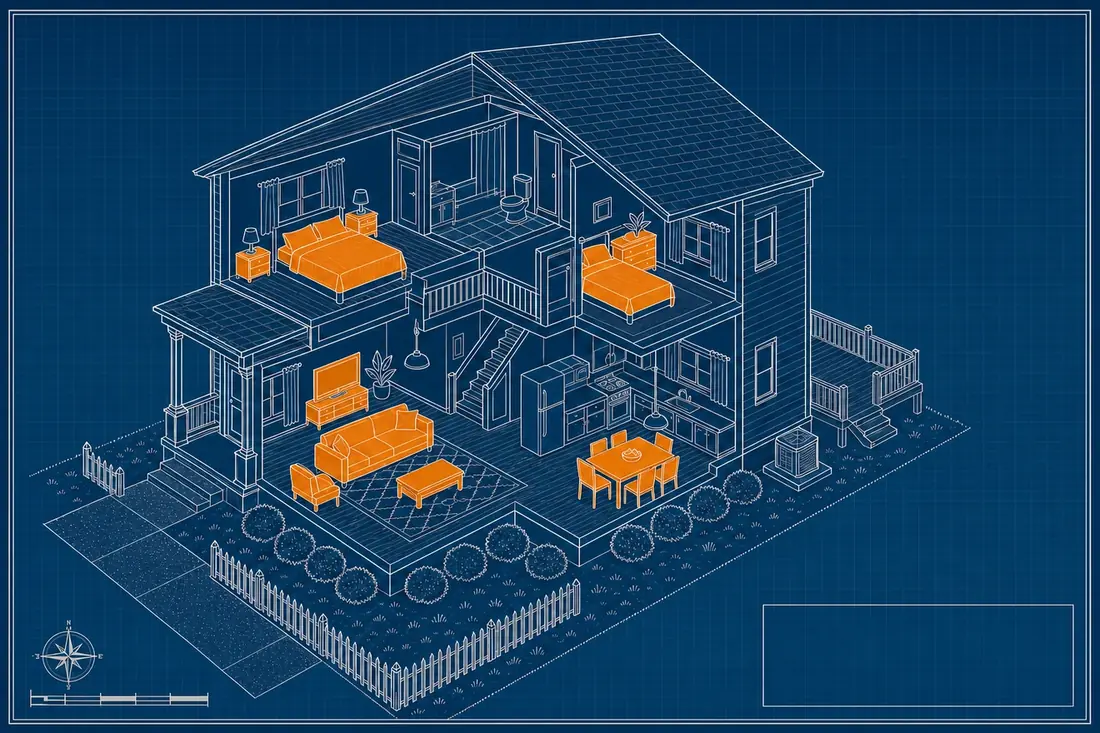
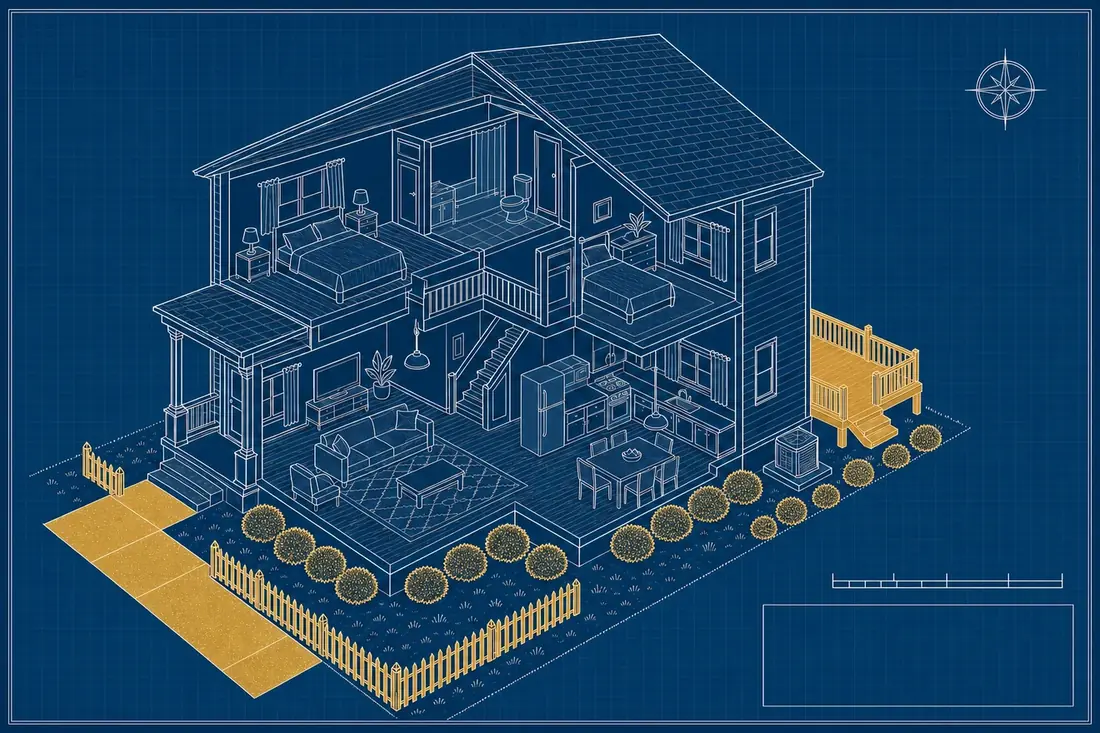
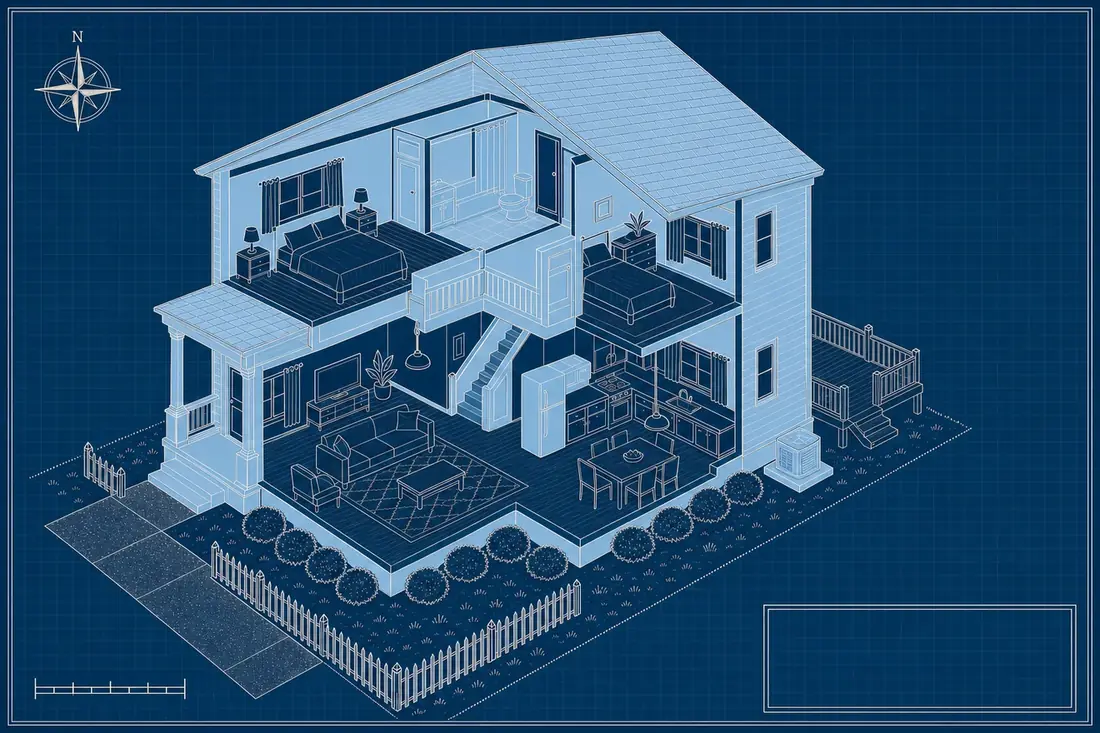
Watch a beach house rental get built and classified A hypothetical $1.4 million four-bedroom oceanfront house goes up on timber pilings, from the shell driveway and the parking level to the living floor, the porches and the terrace. Every component lands on its depreciation schedule as it is installed, and the year-one depreciation adds up on screen. Watch the 90-second walkthrough »A historic city beside the beachLewes is a small city in Sussex County, Delaware, at the mouth of the Delaware Bay beside Cape Henlopen State Park. It is also the Delaware terminal of the Cape May-Lewes Ferry, which links it to the Cape May County shore on the Cape May County page. Washington, Baltimore, and Philadelphia are the drive-to metros. The rental stock splits two ways: older homes in and around the historic district, and newer construction nearer the beaches. The ocean-facing towns to the south, Rehoboth, Dewey, Bethany, and Fenwick, are covered on the Delaware beach towns page. A Lewes mailing address does not by itself put a property inside the city limits. The rules below apply to rentals the City of Lewes licenses; a property outside the city answers to the county or another jurisdiction. 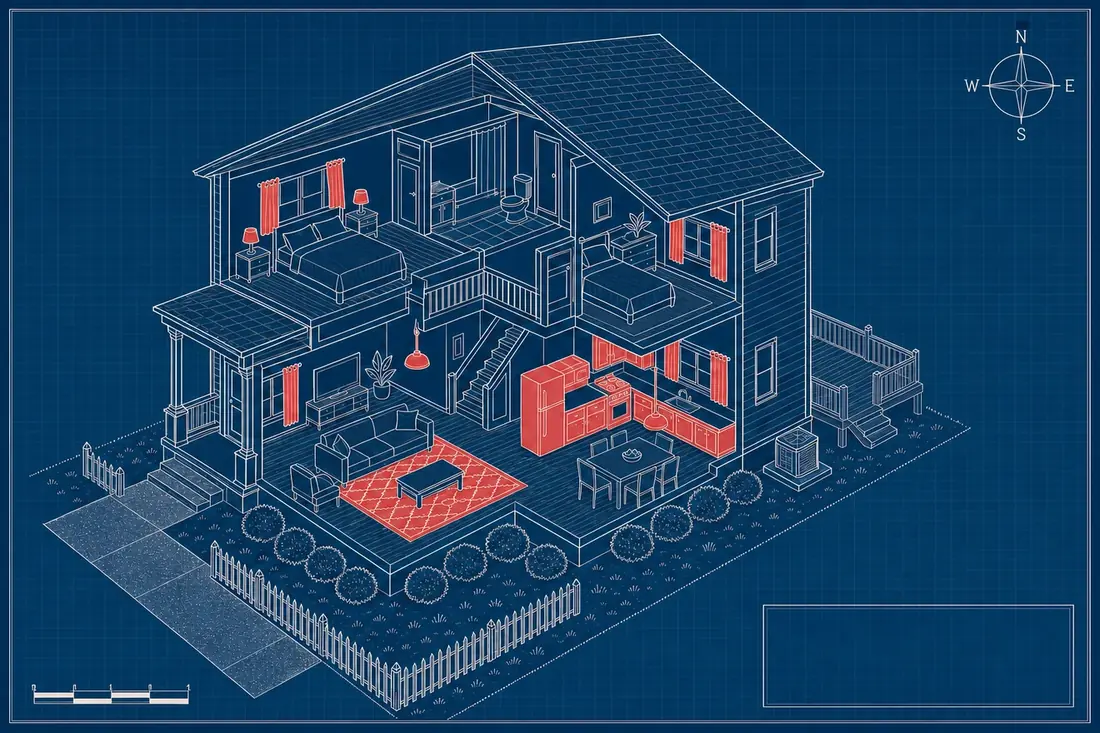
5-Year: carpet and flooring, cabinets, appliances, light fixtures, curtains 7-Year: furniture 15-Year: driveway, fencing, landscaping, deck 27.5/39-Year Shell: roof, load-bearing walls, foundation, central HVAC Get your free Preliminary Benefit Estimate Run the free estimate at /qualify to see what a specific Lewes rental could accelerate. Request Your Free Estimate »What the City of Lewes publishes about rentalsThe city adopted its residential rental ordinance on October 10, 2022, effective January 1, 2023. Its short-term rental page defines a short-term residential rental as occupancy of 30 consecutive days or less, and lists what the city requires of an owner:
The application asks the number of bedrooms, whether the unit is owner-occupied, and whether a property manager or an online listing platform is used, and it records the owner's consent to inspection by the Planning and Building Department. The city asks owners to keep rental booking dates and rental income and to provide them with the annual tax remittance. This is a public-record description of the ordinance, and the fee figures are as posted when this page was written. Delaware's state lodging tax on short-term rentalsThe Division of Revenue's short-term rental FAQ states that Delaware imposes a 4.5% short-term rental lodging tax under 30 Del. C. ch. 62, on agreements entered into on or after January 1, 2025. It defines a short-term rental as a dwelling rented for no more than 31 consecutive nights, a day longer than the city's 30-day definition. The FAQ carves out hotels, motels, and tourist homes, which carry a separate Delaware business license, and a casual rental of no more than 10 nights a year at rent well below market. Rent for the tax excludes municipal taxes, linen and cleaning fees, and security deposits. The FAQ makes an accommodations intermediary, such as a listing platform, responsible for collecting and remitting the tax when it books the stay, and says the state tax does not replace a tax imposed by a Delaware municipality. Both taxes are collected on the rental, not on income. They sit outside depreciation and affect pricing and bookkeeping, not which building components reclassify. Estimate the first-year deduction on a property hereA few questions and the building value give a preliminary first-year deduction range, using the same rule as our free calculator. The breakdown can be emailed to you, or you can book a 15-minute call. Step 1 of 3 What kind of property?
Who runs it day to day?
What is the average guest stay?
When did you buy it?
How many rentals do you own?
Across all of them, does your rental portfolio show taxable income overall?
Any of them likely to sell in the next few years?
Prefer to talk it through? Book straight from here. No form needed.
One set of records, two jobsThe booking dates and rental income the city asks for are the same data the short-term rental exception runs on. Reg. 1.469-1T(e)(3)(ii) looks at the average stay across the year, and the 7-day rule page shows how it is computed from a booking log. Summer weeks, spring and fall weekends, and holiday stays all feed the average. Material participation is the separate test: 500 hours, substantially all the participation, or 100 hours and more than any other individual. Many Lewes owners live in the Washington, Baltimore, or Philadelphia areas and designate a local contact or hire an agency, and that person's hours count against the owner in the 100-hour comparison. The out-of-state hours page covers the arithmetic. A family that also uses the house should track the 14-day personal-use line, on the personal-use page. Historic-district houses and newer beach-area buildsA study classifies what is physically in the building today, not its age. An older Lewes home and a house finished last year both carry cabinetry, flooring, appliances, and decorative lighting that reclassify out of the building's own 27.5- or 39-year schedule. Whether a house sits in the historic district is a zoning and renovation question, and it does not change how the existing components are classified.
An older home that has been renovated is a different case. When a component is replaced, the remaining basis of what came out can generally be written off under the partial asset disposition rule, but only in the tax year of the replacement, covered on the after-renovation page. A house held for years with no component separation is a look-back candidate, claimed through Form 3115 with a section 481(a) catch-up, on the look-back page. Getting a number for a Lewes propertyEvery study is custom-priced to the property, and short-term rental studies work from listing photos with no site visit. Turnaround normally runs 1 to 2 weeks for a residential rental and 2 to 3 weeks during tax season. Basis guarantees at least 30 times the fee in first-year deductions on a short-term rental, or that study is free. Compare Sussex County's ocean towns on the Delaware beach towns page, or the Maryland line just south on the Ocean City, MD page. The 60-second qualifier at /qualify models a specific property before any commitment. Frequently asked questionsIs Lewes in the same county as Rehoboth Beach? Yes. Lewes, Rehoboth Beach, Dewey Beach, Bethany Beach, and Fenwick Island are all in Sussex County, Delaware's only coastal county. Lewes has its own city government and its own rental rules. What does the City of Lewes require for a short-term rental? The city's pages describe a rental license at $200 a year, a 5% Gross Receipts Rental Tax, a local contact who can respond within two hours, an occupancy cap, and the rental identification number in advertising. Confirm current terms with the city. Does Delaware tax short-term rentals? The Division of Revenue states a 4.5% short-term rental lodging tax on agreements entered into on or after January 1, 2025, usually collected by the listing platform. A municipal tax, where one exists, is separate. Do these taxes change how a Lewes house depreciates? No. Lodging taxes, license fees, and the city's gross receipts tax are operating costs and local rules. Depreciation runs on federal rules, and the schedules a study uses are the same in every state. Does a Lewes rental need a site visit for a study? No. Short-term rental studies work from the listing photos already posted for guests, so there is no scheduled visit and no owner homework list. Get your free Preliminary Benefit Estimate Send the address or the listing link. We model the number first; you decide with it in hand. Request Your Free Estimate »Educational information, not tax advice. This page describes how federal
depreciation rules and tests work in general. Whether any rule fits your facts is a determination for
you and your CPA. Our study gives your CPA the engineering and the numbers to make that call.
Related guides: How Does Cost Segregation Work in Vacation... · Does Cost Segregation Work on a Poconos... · Cost Segregation for a Jersey Shore Rental... · Cost Segregation for a Pigeon Forge Cabin... · Cost Segregation for a Gatlinburg Rental...
More Mid-Atlantic Shore markets: Cost Segregation for a Jersey Shore Rental... · Cost Segregation for Cape May County Shore... · Cost Segregation for a Deep Creek Lake... · Cost Segregation for a Long Beach Island... · Cost Segregation for an Ocean City, New... · Cost Segregation for an Ocean City... · All vacation markets
|