|
Cost Segregation for Commercial & Short-Term Rental Owners
|
Request a free estimate [email protected] |
How It Works
Minimum ROIOur study identifies at least 20x its fee in first-year deductions on commercial property, or at least 30x on a short-term rental, or it is free. |
How Many Years Do You Depreciate a Rental Property?A residential rental property, a single-family home, duplex, or small apartment building, depreciates over 27.5 years under section 168(e)(2). A commercial or nonresidential building depreciates over 39 years. Land is never depreciated under either schedule; only the building and its improvements qualify. A cost segregation study does not change either default schedule. It identifies which pieces of the building, carpet, cabinetry, site utilities, actually belong in faster 5-, 7-, or 15-year classes instead. Key takeaways
Steven's Take I get the same phone call more than any other on this site: someone convinced a cost segregation study changes their property's depreciation schedule. It does not. Residential stays at 27.5 years, commercial stays at 39, land never depreciates under either one. What a study actually does is pull specific components, carpet, cabinetry, site utilities, out of that long schedule and into 5-, 7-, and 15-year classes where they belong. That distinction is the whole business. Nobody is rewriting the tax code for a building. Someone is looking closely enough at it to find the pieces that were misclassified from the day it was placed in service. Steven Ellis, Founder The Two Default SchedulesEvery rental building lands on one of two default recovery periods before anyone reclassifies anything inside it. Residential rental property depreciates over 27.5 years on the straight-line method. The tax code defines it under section 168(e)(2) as a building where 80% or more of the gross rental income for the year comes from dwelling units, ordinary homes people live in. Nonresidential real property, commercial buildings, offices, retail, warehouses, depreciates over 39 years instead. Those two numbers are the whole starting point. A duplex an owner rents to two families runs on the 27.5-year schedule. A strip mall or a medical office runs on the 39-year schedule. Nothing about the building's age, size, or condition changes which of the two numbers applies; the test is what kind of income the building produces. 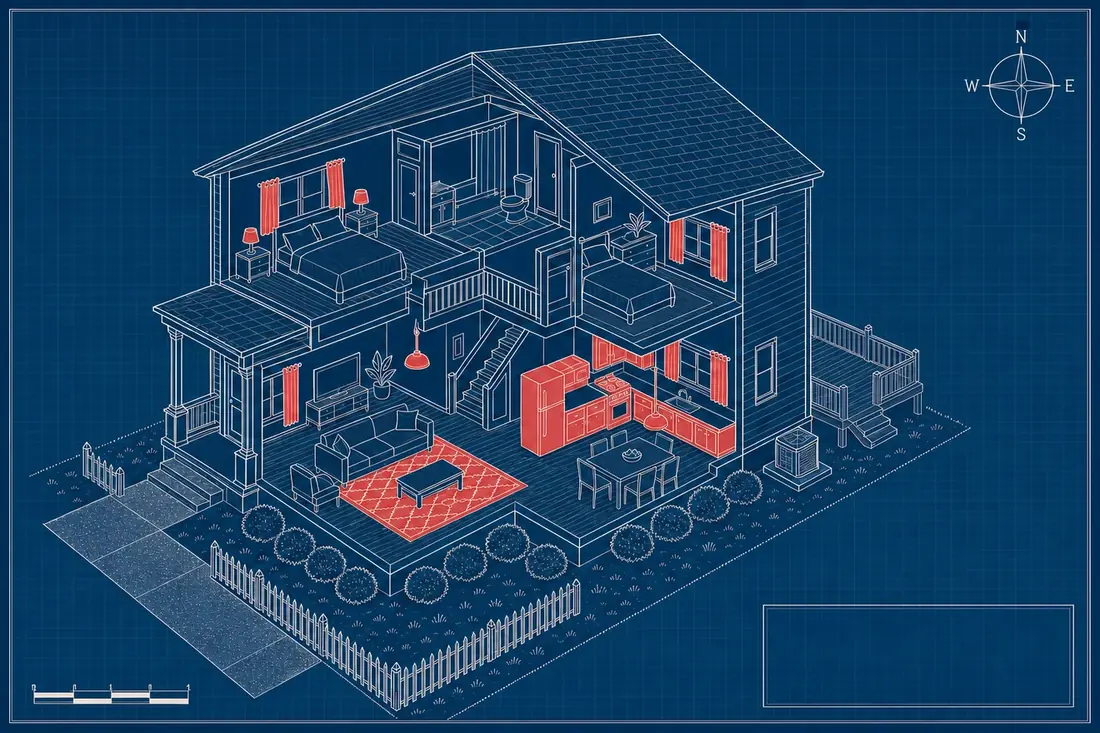
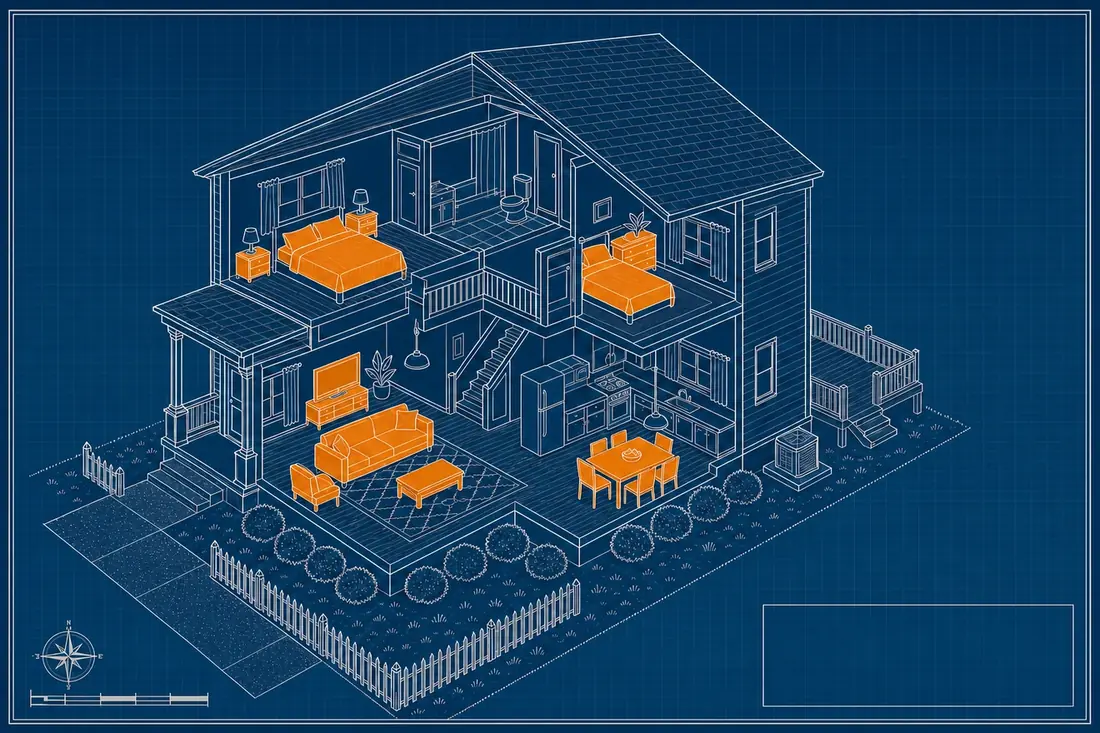
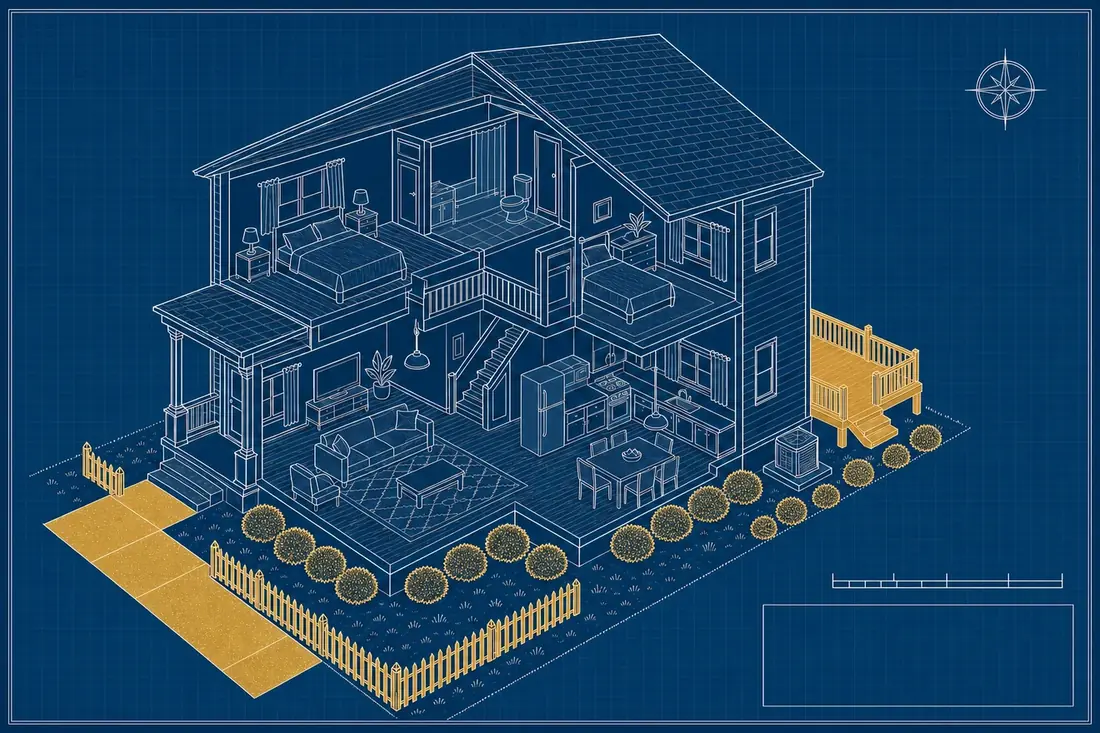
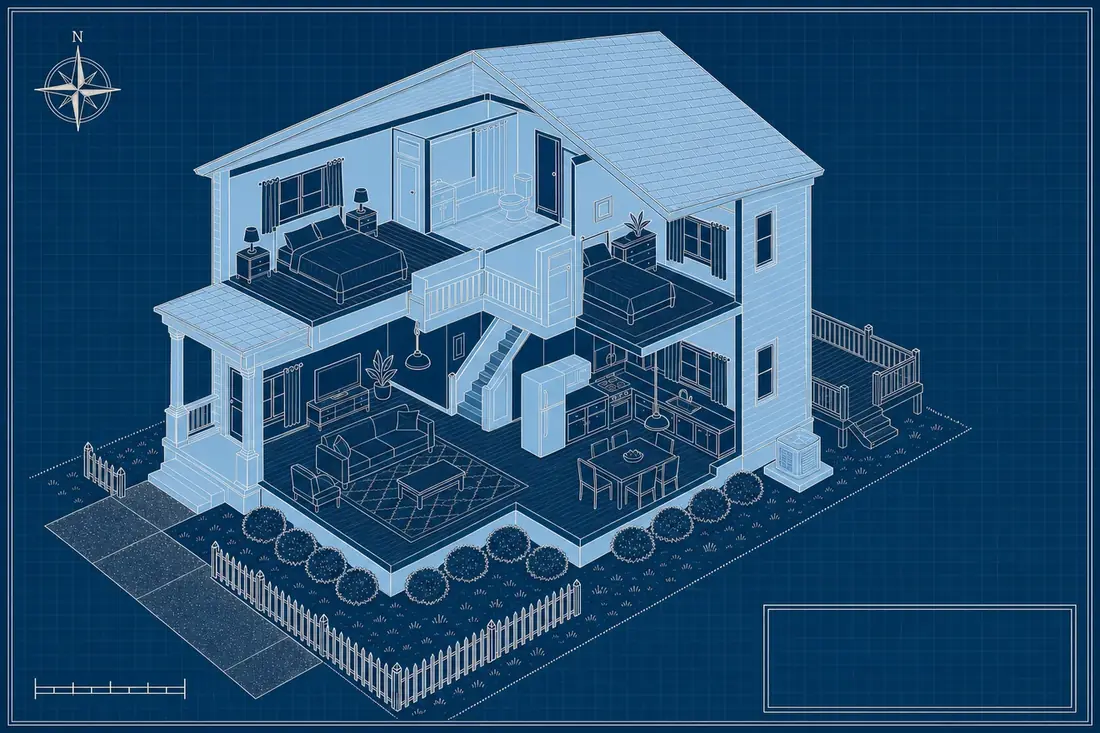
5-Year: carpet and flooring, cabinets, appliances, light fixtures, curtains 7-Year: furniture 15-Year: driveway, fencing, landscaping, deck 27.5/39-Year Shell: roof, load-bearing walls, foundation, central HVAC Get your free Preliminary Benefit Estimate Get the free Preliminary Benefit Estimate to see which components inside your building's shell a study would separate out, before any commitment. Request Your Free Estimate »Land Never DepreciatesBefore either schedule starts, land value comes out of the calculation entirely. Land does not wear out, so the tax code never lets it depreciate under any schedule, residential or commercial. A closing statement or a county property record splits a purchase price into land value and building value, and only the building value becomes depreciable basis. This split happens before a cost segregation study ever gets involved. A study reclassifies pieces of the building's basis into faster schedules; it has no effect on the land value, which stays excluded start to finish. An owner who buys a $500,000 property with $100,000 of that allocated to land depreciates against the remaining $400,000 building value only, regardless of which of the two default schedules applies. The Component Classes a Study SeparatesThe 27.5-year and 39-year numbers describe the building's structural shell: the foundation, the framing, the roof deck, the exterior walls. A cost segregation study looks inside that shell and pulls out the pieces that were never really 27.5- or 39-year property to begin with, moving them onto their own, much shorter schedules.
Everything a study does not pull into one of those three classes stays on the building's original 27.5- or 39-year schedule. A common misconception treats a structural roof or a building's central HVAC as 5-year property; both are structural components of the shell and stay on the 39- or 27.5-year schedule, not the 5-year class. There is no 9-year class in the tax code; every component lands in 5, 7, 15, or the building's own default schedule. The 60-Second Qualifier Four questions. Our engineering team's model shows the estimated first-year acceleration a study of your property would target, free, before you commit to anything. Take the Qualifier »What "Placed in Service" Actually MeansDepreciation does not start on the day a property closes or the day a check clears. It starts on the date the property is placed in service, meaning the date it is ready and available for its intended use, whether or not a tenant has actually moved in yet. For a rental that is move-in ready at closing, the placed-in-service date and the closing date are usually the same day. For a property that needs work before it can be rented, a gut renovation, a new roof before the first tenant, the placed-in-service date can land weeks or months after closing, once the property is actually ready to rent. Getting this date right matters because it is the date every depreciation schedule in this article runs from: the 27.5-year shell, the 39-year shell, and every 5-, 7-, or 15-year component a study identifies. The Mid-Month Convention, in Plain WordsReal property, both the 27.5-year and 39-year schedules, uses what the tax code calls the mid-month convention for its first and last year. In plain terms: no matter what day of the month a property is placed in service, the first year's depreciation is calculated as if it happened on the 15th of that month. A property placed in service on January 3rd and a property placed in service on January 28th get the same first-month depreciation, half a month's worth, treated identically. That convention prorates the first year's depreciation down to only the months the property was actually in service, then runs the full annual amount every year after that until the last, partial year when the property is sold or retired. It applies to the structural shell only; the 5-, 7-, and 15-year components a study identifies generally use a different convention and are bonus-eligible in a way the structural shell is not. Where This Question Gets More SpecificEverything above describes the two default shells and the classes a study can pull out of either one. It does not answer a narrower, and more contested, question: whether a specific short-term rental should be treated as residential (27.5-year) or nonresidential (39-year) in the first place, based on how long guests actually stay. That question turns on a different test, the average length of guest stays measured across the year, and it deserves its own answer rather than a shortcut here. See is short-term rental depreciation 27.5 or 39 years for that specific test. It also doesn't cover what happens once the 27.5-year shell finishes running its full schedule, its own separate question with its own mechanics. See what happens after 27.5 years of depreciation for that answer. Owners who want the full mechanics of the 27.5-year residential schedule itself, not just the headline number, can go deeper at how the 27.5-year depreciation schedule works. Frequently asked questionsDoes a cost segregation study change a rental's 27.5-year or 39-year schedule? No. A study leaves the structural shell on its original 27.5-year (residential) or 39-year (nonresidential) schedule. It reclassifies specific components inside the building, carpet, cabinetry, certain electrical and plumbing, into faster 5-, 7-, or 15-year classes instead of changing the shell's own recovery period. What determines whether a rental is residential or nonresidential for depreciation? The test is whether 80% or more of the building's gross rental income for the year comes from dwelling units, ordinary homes people live in, under section 168(e)(2). A building that clears that threshold depreciates over 27.5 years; one that does not depreciates over 39 years. Is there a 9-year or 10-year depreciation class for rental property? No. The classes that apply to rental property components are 5-year, 7-year, 15-year, and the building's own 27.5-year or 39-year shell. A structural roof or a building's central HVAC system stays on the 39- or 27.5-year shell; neither belongs in the 5-year class, a common misconception. Does the placed-in-service date matter if the property was vacant part of the year? Yes. Depreciation runs from the placed-in-service date, when the property is ready and available for its intended use, regardless of whether it was actually rented every day after that. A vacant unit that is ready to rent still depreciates; the mid-month convention accounts for partial months at the start and end of the recovery period, not for vacancy in between. Does land ever depreciate if it's part of a rental property purchase? No. Land value is excluded from depreciable basis before either schedule starts, under both the 27.5-year residential and 39-year nonresidential rules. A closing statement or county property record is what typically establishes the split between land value and building value. Keep readingGet your free Preliminary Benefit Estimate Send the address or the listing link. We model the number first; you decide with it in hand. Request Your Free Estimate »Educational information, not tax advice. This page describes how federal
depreciation rules and tests work in general. Whether any rule fits your facts is a determination for
you and your CPA. Our study gives your CPA the engineering and the numbers to make that call.
|
Copyright © 2026 Basis Property Group | Philadelphia, Pennsylvania | Studies in all 50 states
Popular guides: Airbnb & STR | Do I Qualify? | What a Study Costs | Audit Risk | When to Do It | Real Examples
About | Careers | Guides | Articles | Site Map | Privacy Policy | Terms of Service
You are visitor 0148293 | Last updated: August 2026 | Best viewed at 1024x768
Content reviewed against IRS Publication 946, Treasury Regulation §1.168, and the IRS Cost Segregation Audit Techniques Guide. For educational purposes only; this site does not constitute tax advice. Consult your CPA before filing. Not affiliated with the IRS.