|
Cost Segregation for Commercial & Short-Term Rental Owners
|
Request a free estimate [email protected] |
Vacation Markets
Free Listing SEO Audit Paste your Airbnb or VRBO listing. Get a scored audit in 90 seconds. Audit My Listing »FREE Estimate Is there a first-year deduction sitting in your building? No cost, no obligation. Request Yours »Minimum ROIOur study identifies at least 20x its fee in first-year deductions on commercial property, or at least 30x on a short-term rental, or it is free. |
Cost Segregation for Lake Lanier Rentals in Hall County, GeorgiaQuick answer Lake Lanier is a U.S. Army Corps of Engineers reservoir north of Atlanta, and a lake house on its shoreline is ordinary rental property for cost segregation: an engineering study moves interior finishes, decks and site work onto 5-, 7- and 15-year schedules instead of leaving everything on the building's own 27.5- or 39-year schedule. What is specific to Lanier is the paperwork around the house. Hall County has a short-term rental code, its hotel/motel excise tax rose to 8% on July 1, 2026, and a dock sits on Corps land under a permit, not on the deeded lot. Own a Lake Lanier rental? See the first-year deduction range a study would look for. 30 seconds, no email to see the range. Start the check ↓Key takeaways
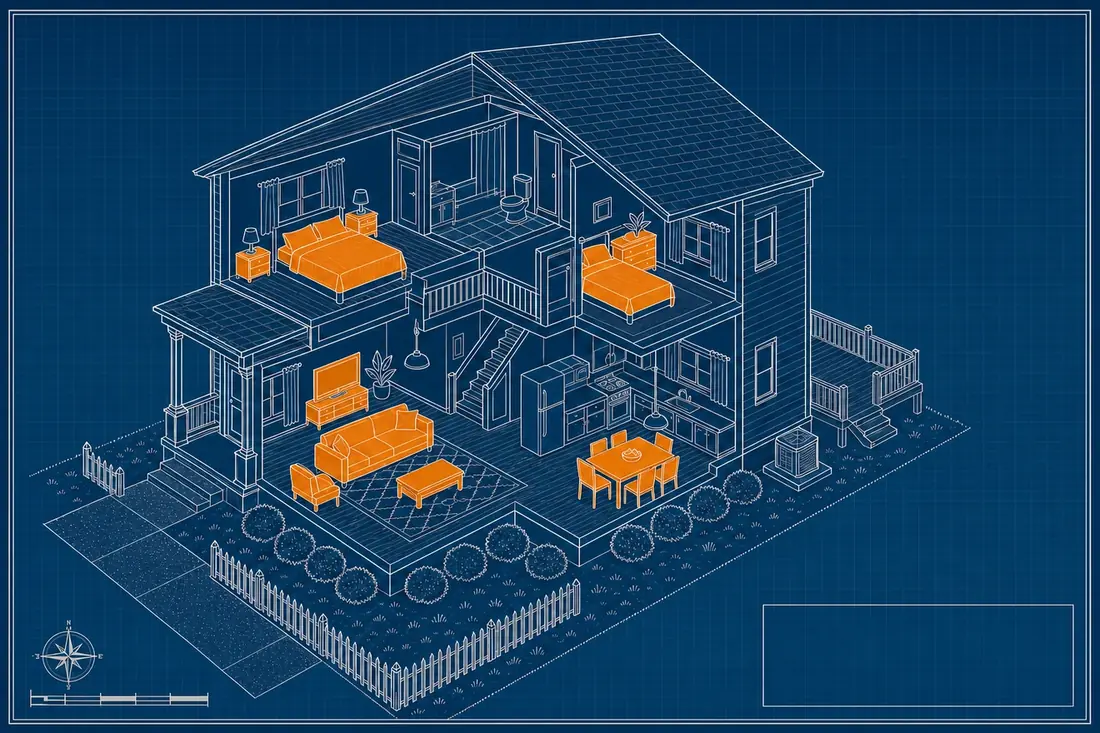
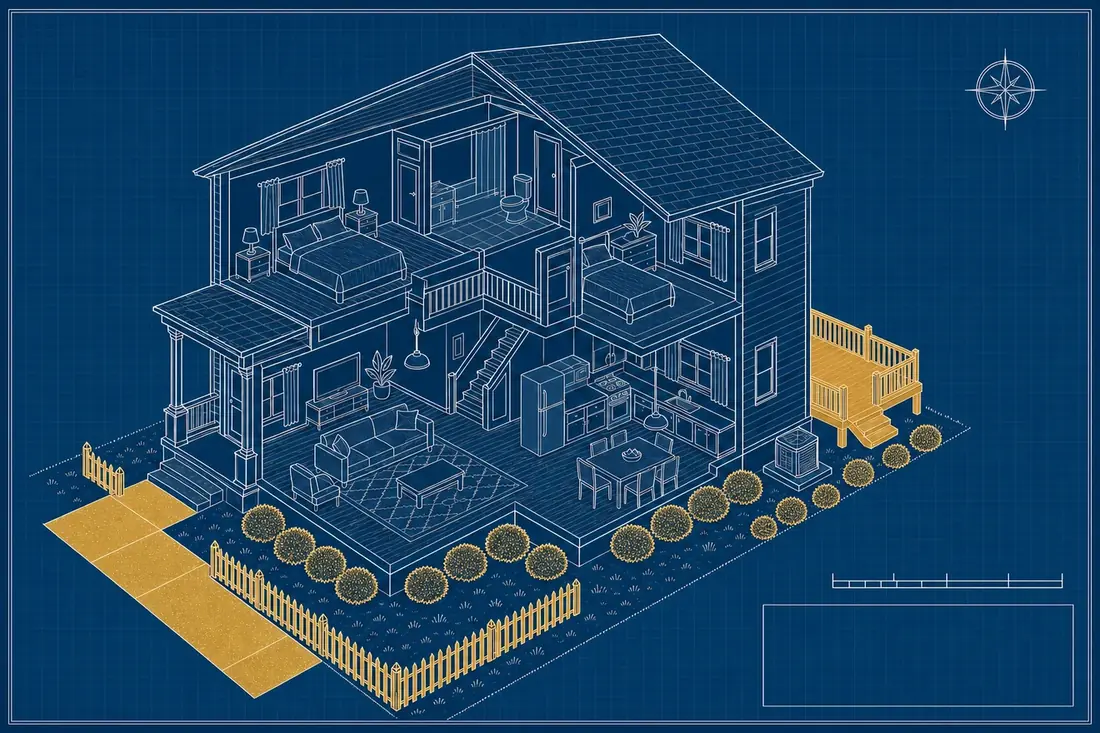
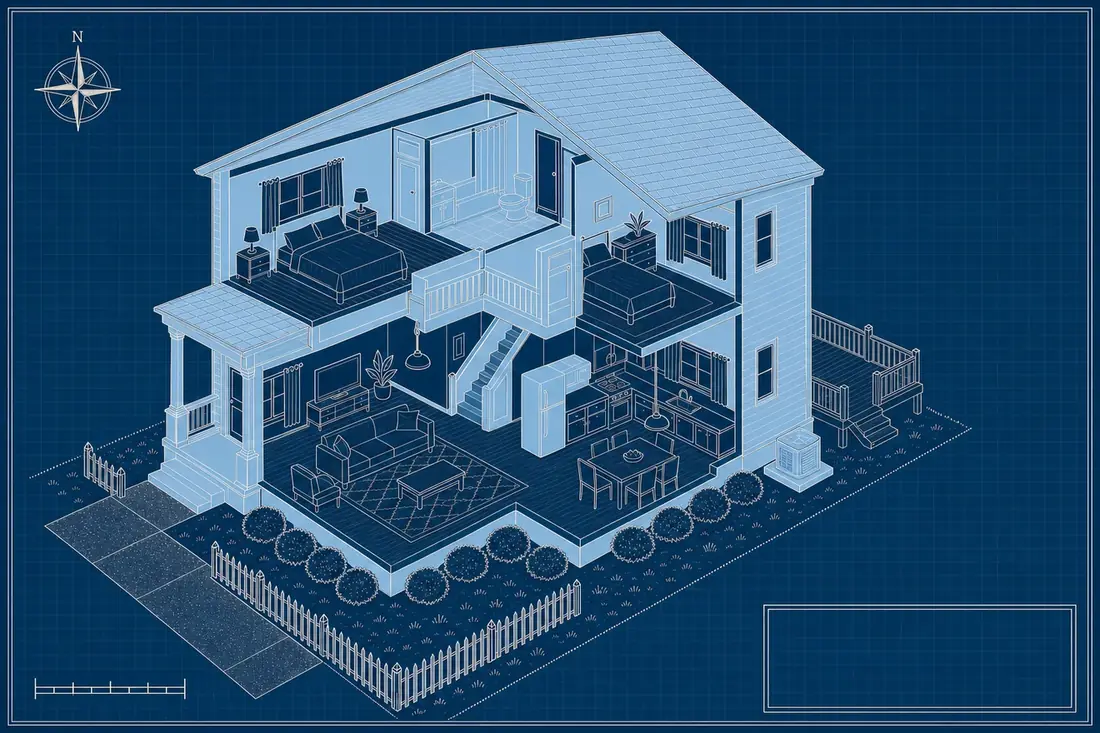
Watch a lake house rental get built and classified A hypothetical $900,000 four-bedroom lake house goes up on a sloping lot, from the driveway and the walkout level to the great room, the screened porch and the covered dock. Every component lands on its depreciation schedule as it is installed, and the year-one depreciation adds up on screen. Watch the 90-second walkthrough »One lake, several counties, one drive from AtlantaLake Lanier sits northeast of Atlanta behind Buford Dam, and its shoreline includes parts of Hall, Forsyth, Dawson and Lumpkin counties. Hall County, with Gainesville as its seat, is the one most owners mean when they say Lanier, so this page leads with it. The other three counties have their own assessors, their own codes and their own tax offices. A lake house in Dawson County does not follow Hall County's rental code just because the water is the same water. The rental calendar is built around Atlanta. Summer is boating season, with weekly stays and long weekends, and the shoulder months fill with shorter trips from the metro area. Property styles run from older lakeside cottages to newer houses with finished lower levels, screened porches, large decks and a private dock. A cost segregation study does not care which county the lot is in. It cares what is physically in the house and on the site. 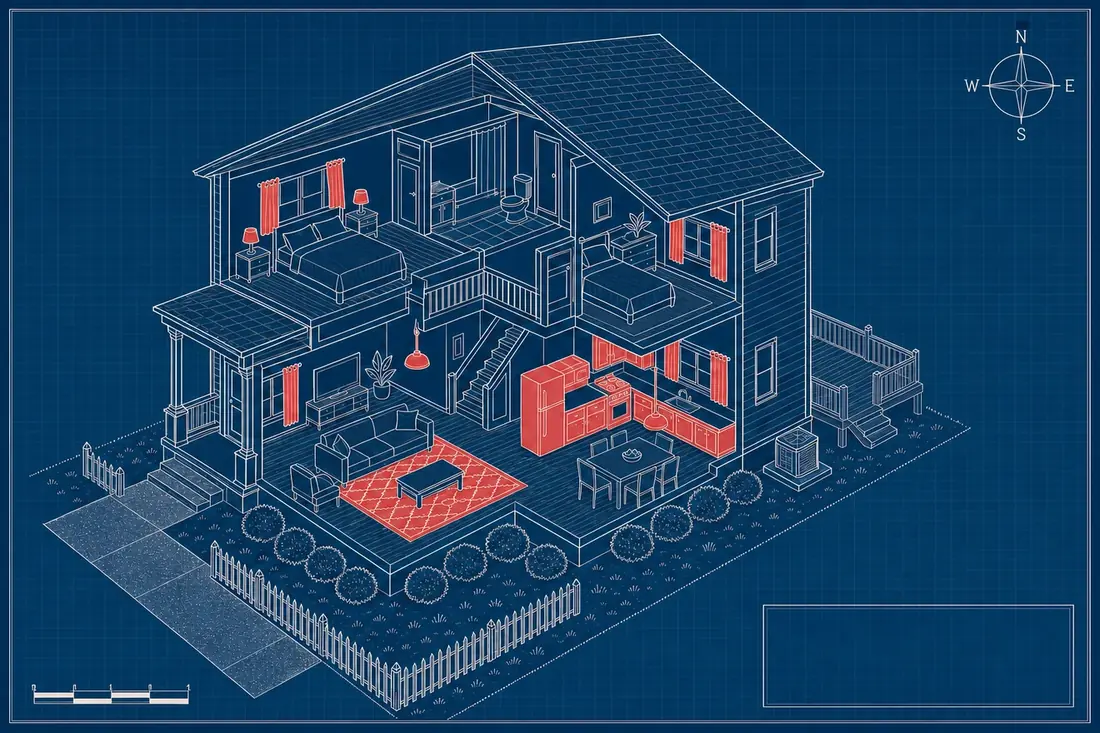
5-Year: carpet and flooring, cabinets, appliances, light fixtures, curtains 7-Year: furniture 15-Year: driveway, fencing, landscaping, deck 27.5/39-Year Shell: roof, load-bearing walls, foundation, central HVAC Get your free Preliminary Benefit Estimate See what a Lake Lanier house could accelerate with the free estimate at /qualify. Request Your Free Estimate »What Hall County publishes about renting a lake houseHall County's short-term rental code, Chapter 5.100 of the county code, defines a short-term rental as a vacation home rented for not less than 2 nights and not more than 30 consecutive nights. It applies in the unincorporated areas of the county, and the county's page, Short Term Rental Properties, says these rentals are permitted in all residential zoning districts. The published process is an application to the Business License Department, a building inspection, and then payment for the license. Lanier also touches incorporated cities, which are separate jurisdictions, so the first fact for any house is which code covers its address. On tax, the county's Hotel/Motel Tax Portal states that the Board of Commissioners adopted an increase in the hotel/motel excise tax from 5% to 8%, effective July 1, 2026. The same page says every business holding a short-term rental license files a monthly Hotel/Motel Tax Report, with platform bookings collected and remitted by the platform and other bookings collected by the owner. Georgia also charges a state hotel-motel fee of $5.00 per night, described in the Georgia Department of Revenue FAQ. The dock sits on land the owner does not ownThe Corps of Engineers runs a shoreline permit program on Lanier. Its Permit Program page says permits are issued for a maximum of five years, are nontransferable, and grant no real estate rights. It also says a new owner of an existing facility applies through the Operations Management Office, and that the office limits how many permits exist at one time. That makes the dock a different kind of item from the house and the lot. The lot is deeded land. The dock is a structure on public shoreline under a permit with a term. In a study our engineering team lists a dock, a boat lift or a walkway to the water as its own component with its own cost, rather than folding it into the house or the land. Items like these are generally land improvements on the 15-year schedule, and how a specific permit situation affects a specific owner is a question for that owner's CPA. The rest of the site sorts the same way. Steps down a slope, a retaining wall holding a lakeside lot, a paved driveway and exterior lighting are site work, separate from the structure. The page on 15-year site improvements covers that bucket. Estimate the first-year deduction on a property hereA few questions and the building value give a preliminary first-year deduction range, using the same rule as our free calculator. The breakdown can be emailed to you, or you can book a 15-minute call. Step 1 of 3 What kind of property?
Who runs it day to day?
What is the average guest stay?
When did you buy it?
How many rentals do you own?
Across all of them, does your rental portfolio show taxable income overall?
Any of them likely to sell in the next few years?
Prefer to talk it through? Book straight from here. No form needed.
What reclassifies in a lake house, and what stays putInside the house, cabinetry, appliances, carpet and most flooring, window treatments and decorative lighting generally move to 5-year property. Certain furniture and built-in fixtures generally move to 7-year property. The shell, the roof structure, the foundation and the central HVAC generally stay on the building's own schedule, 27.5 years or 39, and a short-term rental averaging stays of 7 days or less generally lands on 39 (see the 27.5 or 39 years guide). A study typically shifts 15 to 35% of a building's basis into the faster schedules. The general walk-through is on the lake house rental page, and the cabin version is on the cabin page. A house owned for years can be studied through a look-back on Form 3115, covered in the look-back guide. Two different definitions of short-termHall County's 2-to-30-night definition is a licensing line. The federal short-term rental exception under Reg. 1.469-1T(e)(3)(ii) is a different test. It asks whether the average guest stay across the year is 7 days or less. A house can be a short-term rental under the county code and still sit outside the 7-day average if most guests stay a month. A Lanier calendar is mixed. Summer weeks, holiday long weekends and quiet winter stretches blend into one yearly average, and that average is what the federal test uses. The average-stay guide shows the calculation. If the average lands at 7 days or less, the next question is material participation, and that is where an owner who lives in Atlanta and uses a local manager runs into the comparison of hours. The material participation page lays out the tests. Which one, if any, a specific owner's hours clear is a question for that owner's CPA. Hypothetical math, then a real estimateThe public assessor record is where the land and building numbers start. Hall County links qPublic from its GIS and mapping page for parcel and assessment information, and each of the other Lanier counties keeps its own. Land is never depreciable, so the building share is the part that matters. The assessor's split is a reference point, not the allocation a purchase uses, and the land value guide covers how that allocation gets set. For scale, take a hypothetical lake house with a building value of $500,000, land excluded. Our free estimate's rule for a short-term rental is 16% to 26% of building value, which gives $80,000 to $130,000 of estimated first-year deductions. That range assumes 100% bonus depreciation, which applies to property acquired after January 19, 2025. It is a deduction, not a cash figure, and an engineered study sets the real number. A free Preliminary Benefit Estimate at /qualify runs that rule on a specific house, and short-term rental studies work from listing photos with no site visit. For a nearby mountain market, see the Blue Ridge, Georgia cabin page, or the vacation rental hub. Frequently asked questionsWhich counties does Lake Lanier cover? The shoreline includes parts of Hall, Forsyth, Dawson and Lumpkin counties. Each has its own tax assessor and its own rules, so the county where the house sits decides which code and which tax office apply. What is Hall County's hotel/motel tax rate? Hall County's Hotel/Motel Tax Portal says the excise tax rate rose from 5% to 8% effective July 1, 2026. Georgia's state hotel-motel fee of $5.00 per night is separate. Does Hall County require a license for a short-term rental? The county's published process is an application to the Business License Department, a building inspection, and payment for the license. Its code defines a short-term rental as 2 to 30 consecutive nights and applies in the unincorporated areas. Is a Lake Lanier dock part of a cost segregation study? A dock is generally listed as its own component, usually in the 15-year land improvement group. The Corps says its shoreline permits grant no real estate rights, so a dock is separate from the deeded lot. Is the county's 30-night definition the same as the federal 7-day test? No. The county definition is a licensing line, and the federal exception looks at whether the average guest stay across the year is 7 days or less. Does a lake house need a site visit for a study? Short-term rental studies work from listing photos, so no scheduled site visit is needed for a lake house or a cabin. Get your free Preliminary Benefit Estimate Send the address or the listing link. We model the number first; you decide with it in hand. Request Your Free Estimate »Educational information, not tax advice. This page describes how federal
depreciation rules and tests work in general. Whether any rule fits your facts is a determination for
you and your CPA. Our study gives your CPA the engineering and the numbers to make that call.
Related guides: How Does Cost Segregation Work in Vacation... · Does Cost Segregation Work on a Poconos... · Cost Segregation for a Jersey Shore Rental... · Cost Segregation for a Pigeon Forge Cabin... · Cost Segregation for a Gatlinburg Rental...
More Southern Appalachians markets: Cost Segregation for a Townsend, Tennessee... · Cost Segregation for Chincoteague, Virginia... · Cost Segregation for a Pigeon Forge Cabin... · Cost Segregation for a Gatlinburg Rental... · Cost Segregation for a Smoky Mountain... · Does Cost Segregation Work for a Blue... · All vacation markets
|