|
Cost Segregation for Commercial & Short-Term Rental Owners
|
Request a free estimate [email protected] |
Vacation Markets
Free Listing SEO Audit Paste your Airbnb or VRBO listing. Get a scored audit in 90 seconds. Audit My Listing »FREE Estimate Is there a first-year deduction sitting in your building? No cost, no obligation. Request Yours »Minimum ROIOur study identifies at least 20x its fee in first-year deductions on commercial property, or at least 30x on a short-term rental, or it is free. |
Cost Segregation for Helen, Georgia Cabins and River-Front RentalsQuick answer Cost segregation works on a Helen, Georgia rental the same way it works on any residential rental: an engineering study reclassifies the interior finishes, fixtures, and site work into 5-, 7-, and 15-year schedules instead of leaving them on the building's own 27.5- or 39-year schedule. Helen sits in White County on the Chattahoochee River, and it runs its own lodging registration separate from the county's host license for unincorporated areas, so the paperwork depends on which side of the city line a property sits. The depreciation mechanics are the same on both. Own a Helen, GA rental? See the first-year deduction range a study would look for. 30 seconds, no email to see the range. Start the check ↓Key takeaways
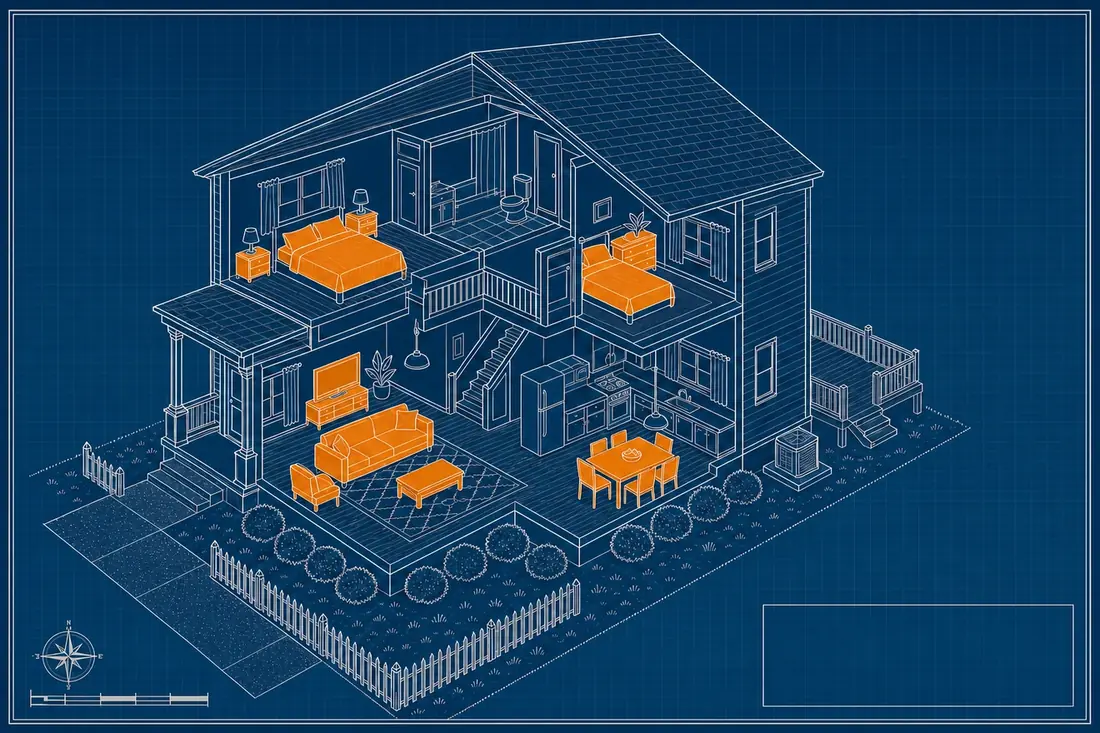
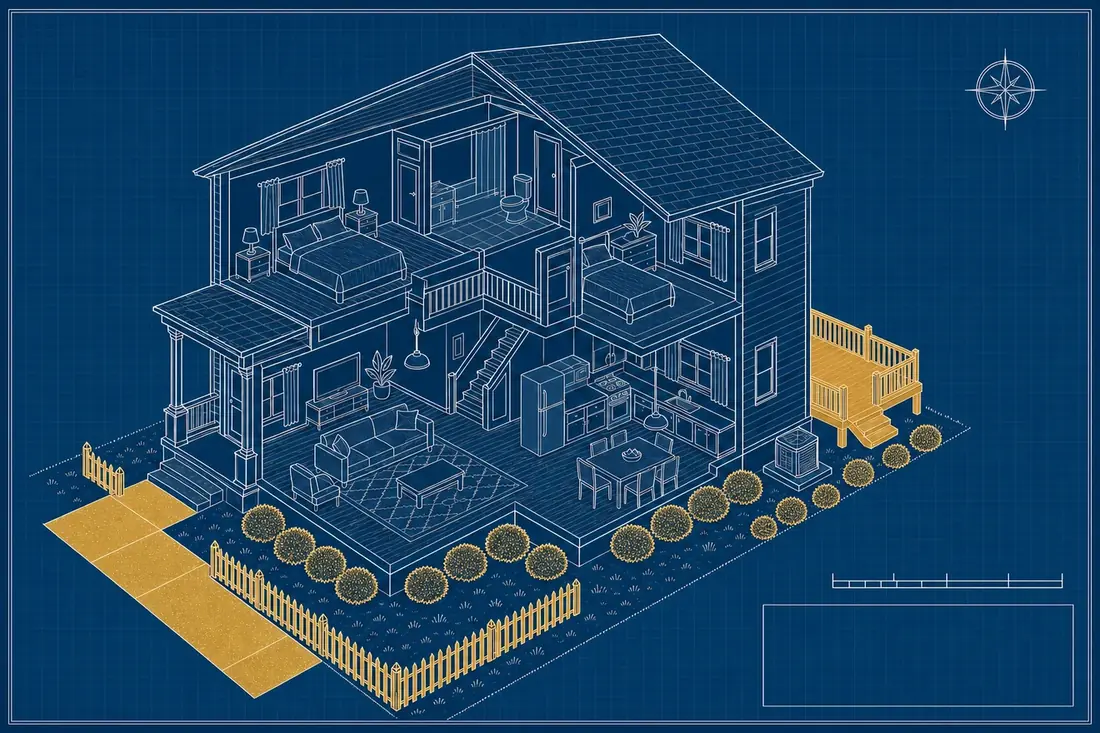
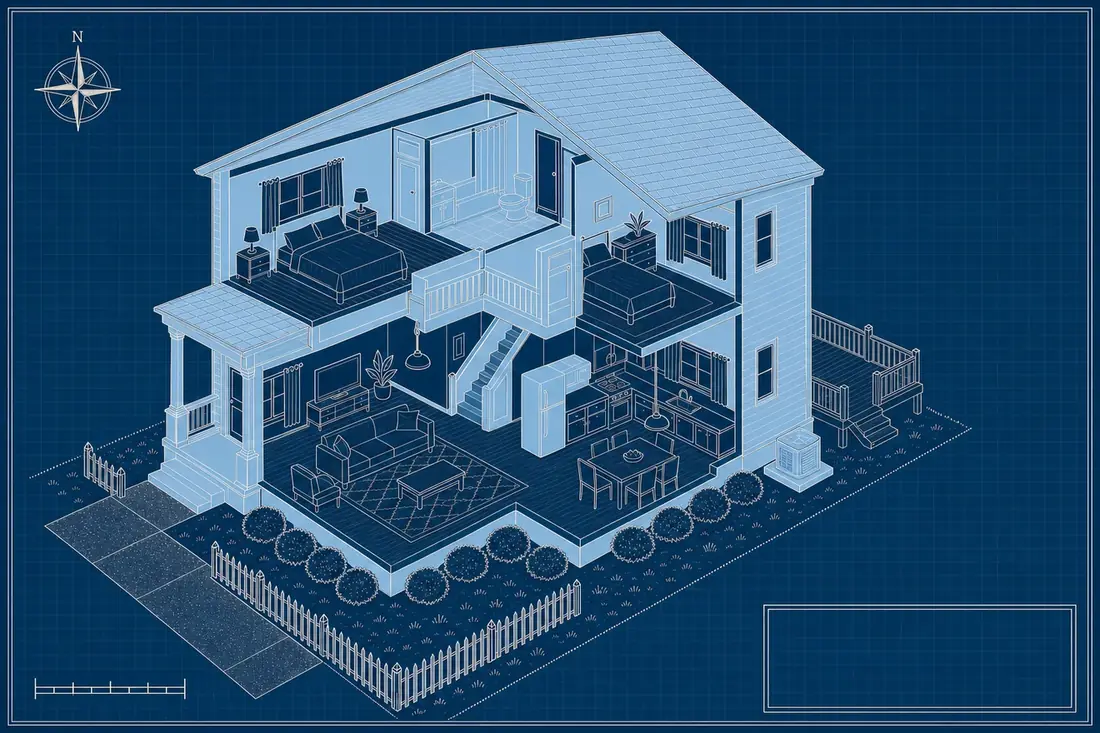
Watch a log cabin rental get built and classified A hypothetical $600,000 three-bedroom log cabin goes up floor by floor, from the gravel drive and foundation to the game loft and the hot tub on the deck. Every component lands on its depreciation schedule as it is installed, and the year-one depreciation adds up on screen. Watch the 90-second walkthrough »A tourist town inside a countyHelen is a small city in White County, in the North Georgia mountains, built out in an alpine theme with the Chattahoochee River running through the middle of town. Summer is tubing season on the river. Fall brings Oktoberfest and leaf color, the sharpest peak of the year. Unicoi State Park sits just outside town, and the surrounding hills hold the cabins, while the river-front units sit closer to the shops. Atlanta is the main drive-to market, which feeds a steady stream of weekend trips on top of the summer and fall peaks. Cleveland is the White County seat, and the county government, assessor, and tax commissioner sit there rather than in Helen. The city and the county each run their own process for short-term rentals, and a rental falls under one or the other depending on where its parcel sits. 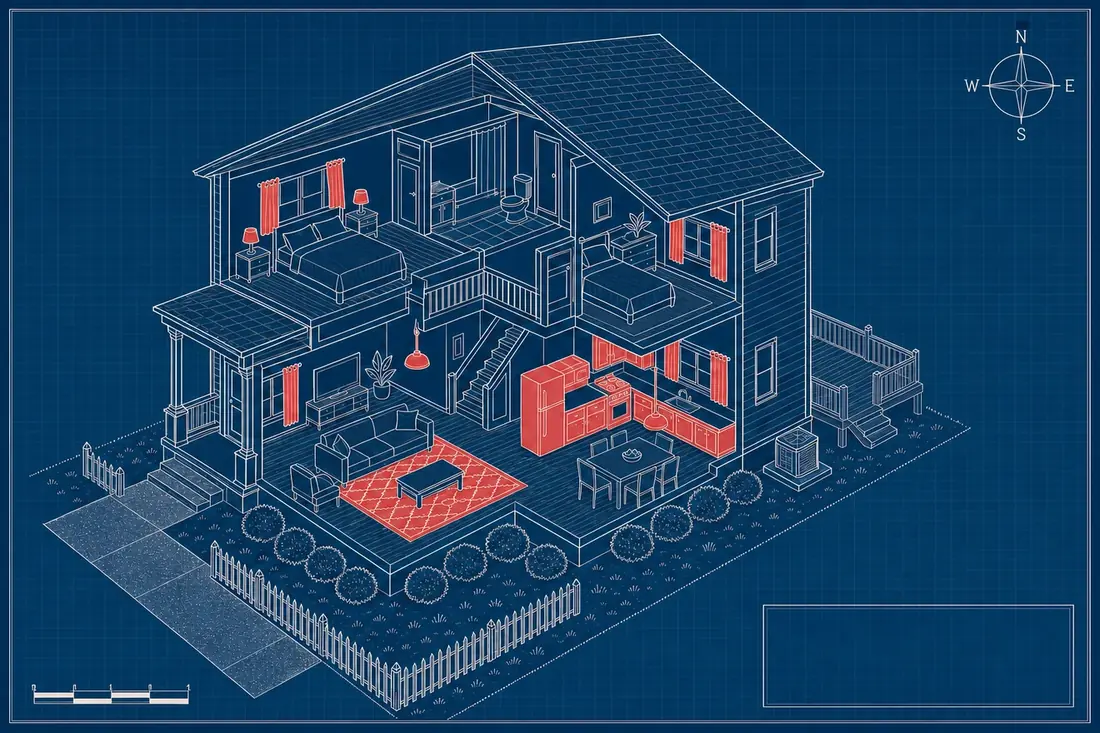
5-Year: carpet and flooring, cabinets, appliances, light fixtures, curtains 7-Year: furniture 15-Year: driveway, fencing, landscaping, deck 27.5/39-Year Shell: roof, load-bearing walls, foundation, central HVAC Get your free Preliminary Benefit Estimate Model a specific Helen cabin's first-year number with the free estimate at /qualify. Request Your Free Estimate »What the City of Helen's registration form asks forThe City of Helen posts its forms on its official website, including a Lodging Registration Application/Renewal. The form says each property or unit is registered individually. It lists the supporting documents: a driver's license, a Georgia sales tax number, a screenshot of the listing on every marketplace used, proof of commercial or short-term rental insurance, and the house rules. The owner certifies that a local manager or contact is reachable around the clock and will respond to a complaint within two hours, and that 8% lodging tax will be remitted to the city by the owner, a management company, or a booking platform. The form also asks for the date rental activity began. A depreciation study keys off a different date, the date the property was placed in service, which sets the bonus rate. Those two dates are separate records, and the registration date does not substitute for the placed-in-service date. Unincorporated White County runs a different processFor rentals outside the city limits, White County's Business Tax Office administers a Short-Term Rental Host License for the unincorporated area. The county's application package calls for an eligibility form from the Planning Department, the property's parcel number and 911 address, a 24/7 emergency contact with a two-hour response, and a certification that 8% lodging tax will be remitted to the county. An occupational tax certificate and a host license are issued for each property. Georgia's Department of Community Affairs publishes a hotel-motel excise tax report. In the August 2025 edition it lists the City of Helen, White County, and the City of Cleveland each at 8 percent. The state also charges a $5.00 per night hotel-motel fee on accommodations furnished by an innkeeper, under Department of Revenue rule 560-13-2-.01. These are guest-facing excise charges, separate from income tax depreciation. Estimate the first-year deduction on a property hereA few questions and the building value give a preliminary first-year deduction range, using the same rule as our free calculator. The breakdown can be emailed to you, or you can book a 15-minute call. Step 1 of 3 What kind of property?
Who runs it day to day?
What is the average guest stay?
When did you buy it?
How many rentals do you own?
Across all of them, does your rental portfolio show taxable income overall?
Any of them likely to sell in the next few years?
Prefer to talk it through? Book straight from here. No form needed.
River-front, hillside, and alpine-style componentsHelen's rental stock splits into hillside cabins and river-front or in-town units, many finished in the town's alpine look. The city's forms page lists architectural guidelines and approved color palettes for building and signage. Whatever the exterior guidelines call for, the finishes are part of the structure, so the timber or stucco shell, roof, and central HVAC stay on the building's own schedule, 27.5 years or 39, and a short-term rental averaging stays of 7 days or less generally lands on 39 (see the 27.5 or 39 years guide). A study works on what sits inside and around the building.
Land is carved out first and never depreciates. See how land and building value are separated, and the 15-year site work page for what lands in that bucket. Summer tubing, Oktoberfest, and the seven-day lineHelen's year has two big shapes. Summer tubing brings families, often for longer stays. The fall Oktoberfest and leaf season bring a rush of shorter weekend trips. A property that books both ends of the year blends them, and the average period of customer use is calculated across the whole year. Under Treas. Reg. 1.469-1T(e)(3)(ii), an average of 7 days or less means the rental is not treated as a rental activity for passive loss purposes, and the next question is material participation. See how the 7-day rule works. Participation depends on who handles the work. An owner who lives nearby and does turnovers personally is in a different position than one who hands the property to a local rental company, since the company's hours count against the owner in the 100-hour comparison. A cabin used personally adds the section 280A limit of the greater of 14 days or 10 percent of rental days. Whether a specific owner clears these tests is for that owner's CPA, run against the actual calendar. Running a number for a specific propertyThe site's free estimate uses one published rule: take the building's value, not counting land, and apply 16% to 26% for a short-term rental. As a hypothetical round example, a rental with a $500,000 building value returns an estimated first-year deduction of $80,000 to $130,000. That is a deduction range from the estimator's rule, not a figure for any owner and not a tax result. The ranges assume 100% bonus depreciation, which applies to property acquired after January 19, 2025. An engineered study sets the real number from the property itself. See how the estimate is built. A cabin or river-front unit owned for years is not locked out. A look-back study picks up the depreciation that was never separated, through Form 3115 with a section 481(a) catch-up in the current year, covered on the page for property already owned. The estimate works from listing photos, no site visit required. For the nearest comparison, see the Blue Ridge, GA cabin page, or browse the vacation rental hub. The 60-second qualifier is at /qualify. Frequently asked questionsIs Helen, Georgia in White County? Yes. Helen is a city in White County, whose seat is Cleveland. A rental inside Helen's city limits follows the city's lodging registration, while a rental in the unincorporated area follows the county's host license. What lodging tax rate does Georgia list for Helen? The Department of Community Affairs report updated August 8, 2025 lists 8% for the City of Helen, for White County, and for the City of Cleveland. Lodging tax is collected from guests and is separate from depreciation. Does the City of Helen require rentals to register? The city posts a Lodging Registration Application/Renewal form on its website for anyone furnishing nightly accommodations for value, with each property or unit registered individually. The city's website carries the current form. Do Helen's alpine-style exteriors change a cost segregation study? No. Exterior finishes are part of the structure and stay on the building's own schedule, 27.5 years or 39, and an average guest stay of 7 days or less generally means 39. The study classifies interior finishes, fixtures, and site work. Does the Chattahoochee river-front location add anything to a study? A river-front unit can carry extra site items such as decks, steps, and retaining walls, which are generally 15-year land improvements. The classification rules are the same as anywhere else. Get your free Preliminary Benefit Estimate Send the address or the listing link. We model the number first; you decide with it in hand. Request Your Free Estimate »Educational information, not tax advice. This page describes how federal
depreciation rules and tests work in general. Whether any rule fits your facts is a determination for
you and your CPA. Our study gives your CPA the engineering and the numbers to make that call.
Related guides: How Does Cost Segregation Work in Vacation... · Does Cost Segregation Work on a Poconos... · Cost Segregation for a Jersey Shore Rental... · Cost Segregation for a Pigeon Forge Cabin... · Cost Segregation for a Gatlinburg Rental...
More Southern Appalachians markets: Cost Segregation for Hiawassee, Georgia and... · Cost Segregation for Dahlonega, Georgia... · Cost Segregation for Lake Lanier Rentals in... · Cost Segregation for a Townsend, Tennessee... · Cost Segregation for Chincoteague, Virginia... · Cost Segregation for a Pigeon Forge Cabin... · All vacation markets
|